








Black and Puer Teas
Our selection of Black, Dark and Puer Teas
Explore our collection of Black, Dark and Puer teas, from smooth, naturally sweet Yunnan black teas to earthy, aged Puer with a rich and distinctive character. The range includes traditional favourites such as Keemun and Lapsang Souchong, alongside raw (sheng) and ripe (shu) Puer teas in loose leaf, cake, brick and individually portioned forms.
These teas offer plenty of variety, from the honeyed and malty notes of Dianhong to the mellow depth of fermented Puer. Browse the collection to discover different origins, ageing styles and brewing traditions, and find a tea that suits your taste.


Fuzi Aged Yunnan Shu Puer 1g Ripe Puer Cha Gao Tea
Choose your option


Old Tree Shu Puer Tea Cha Gao
Choose your option
Puer Tea Oranges (Chenpi Xiao Qing Gan)
Choose your option


2015, Premium Aged Palace Shu Puer Tea, 50g
Choose your option


2017 Aged Shu Puer Tea Brick - 100g
Choose your option


Toppest Old Tree Aged Cha Gao Tea
Choose your option


Yunnan Old Tree Sweet Golden Green Puer Tea – 6g Biscuit
Choose your option


Keemun Hao Ya A, Black Tea A Grade
Choose your option


Lapsang Souchong Tea, Grade A
Choose your option


Wild Zirantuo Ripe Puer Old Tea
Choose your option


Chinese Osmanthus Flower Black Tea Bars
Choose your option


2024 Yunnan 7g Sheng Green Puer – 7g Slice Tea
Choose your option


Gao Ma Ming Zhu Jin Hua Hei Cha (8g Mini Tuan Cha)
Choose your option


Qimen Earl Grey Tea with Chen Pi
Choose your option


10 Years Aged Bamboo Leaf Wrapped Puer Tea Brick, 250g
Choose your option


Lapsang Souchong Earl Grey Tea with Chen Pi
Choose your option


Rare 1996 Yiwu Old Tree Sheng Puer Tea
Choose your option


2014 Wild Liubao Tea Aged Guangxi Dark Tea
Choose your option


Tibetan Dark Tea (Hei Cha/Zang Cha)
Choose your option


Organic Yunnan Whole Bud Golden Spiral Dianhong Black Tea
Choose your option
More about Puer and Black Teas
What Is Puer Tea?
Puer tea, also written as Pu-erh or Pu'er, is a traditional Chinese tea originating from Yunnan Province in southwest China. It is made from large-leaf tea varieties and is particularly valued for the way its character can develop through processing, fermentation and ageing.
Unlike conventional black tea, Puer can undergo microbial fermentation, giving it a distinctive flavour and making it suitable for long-term ageing under appropriate conditions. Depending on how it is produced, Puer can taste fresh, floral and slightly bitter, or deep, earthy and remarkably smooth.
Puer is traditionally available as loose leaves or compressed into cakes, bricks and small individual portions. These different forms make it an interesting tea to explore, especially if you enjoy brewing the same leaves several times.
Raw and Ripe Puer Tea: What's the Difference?
There are two main types of Puer tea: raw (sheng) and ripe (shu). Both originate from Yunnan, but their processing methods create noticeably different flavours.
Raw Puer Tea (Sheng)
Raw Puer is made from tea leaves that are withered, heated, rolled and dried before being sold loose or pressed into cakes and other shapes. Young sheng Puer often has a lively character, with fresh, floral or fruity notes and a noticeable astringency.
With suitable storage, raw Puer can gradually mature over many years. Its flavour may become softer and more rounded, developing greater depth as the tea ages.
Our collection includes younger raw Puer alongside older examples, such as the 1996 Yiwu Old Tree Sheng Puer, for those interested in exploring how ageing influences the tea.
Ripe Puer Tea (Shu)
Ripe Puer undergoes an additional controlled fermentation process, traditionally known as wet piling or wo dui. Developed during the 1970s, this method produces a darker, mellower tea without requiring the extended natural ageing associated with mature raw Puer.
Shu Puer typically produces a deep reddish-brown infusion with earthy, woody and sometimes cocoa-like notes. Good examples are smooth and full-bodied, with relatively little bitterness.
For a traditional ripe Puer, explore our 2015 Premium Aged Palace Shu Puer Tea, a compressed tea from Menghai County in Yunnan.
Chinese Black Tea: Rich, Smooth and Aromatic
Alongside Puer, our collection includes several traditional Chinese black teas. Although both are made from the Camellia sinensis plant, black tea and Puer undergo different processing methods and offer their own distinctive flavours.
Yunnan Dianhong Black Tea
Dianhong is a black tea from Yunnan Province, often recognised by the golden tips found among its leaves. Depending on the grade and growing conditions, it can produce a smooth, full-bodied infusion with notes of malt, honey, caramel and dried fruit.
Our selection includes Golden Spiral Dianhong, Big Gold Needle and high mountain varieties. These are worth exploring if you enjoy black tea with natural sweetness and a rounded flavour.
Keemun Black Tea
Keemun, also known as Qimen, originates from Anhui Province in China. It is appreciated for its refined aroma and balanced flavour, which can include notes of cocoa, dried fruit and gentle malt.
Keemun Hao Ya is a good choice for anyone who enjoys a fragrant black tea without excessive strength or bitterness.
Lapsang Souchong Black Tea
Lapsang Souchong is a traditional black tea associated with the Wuyi Mountains in Fujian Province. It is often known for its smoky character, although the flavour varies considerably between traditional smoked and unsmoked styles.
Our collection includes Lapsang Souchong alongside variations blended with Earl Grey flavouring and Chen Pi, or aged citrus peel.
Black Tea and Puer Tea Compared
Both styles offer rich flavours, but their processing and brewing characteristics differ. This comparison can help you decide which to try first.
Characteristic Chinese Black Tea Puer TeaProcessing Extensively oxidised Raw or deliberately fermented, depending on the styleTypical flavour Malty, honeyed, fruity or cocoa-like Fresh and floral, or earthy and mellowAppearance Usually loose leaf Loose leaf, cakes, bricks or small portionsAgeing Usually enjoyed for its established flavour Some varieties can develop with careful ageingBrewing Teapot, infuser or gaiwan Teapot, infuser or gaiwan; often multiple infusions
Exploring Aged and Compressed Puer Tea
One of the distinctive features of Puer is the tradition of compressing tea leaves into cakes, bricks and smaller shapes. Historically, compressed tea was easier to store and transport. Today, it remains an important part of Puer tea culture.
Tea cakes and bricks can be broken into smaller portions for brewing. Some are pressed quite firmly, while others separate more easily. A Puer tea knife can be useful for tightly compressed leaves, although care is needed to avoid damaging the tea or injuring your hands.
Our collection includes aged Puer bricks, small tea biscuits and individually portioned teas. These formats offer different ways to enjoy Puer without necessarily preparing a large quantity at once.
Puer Tea Oranges (Chenpi Xiao Qing Gan)
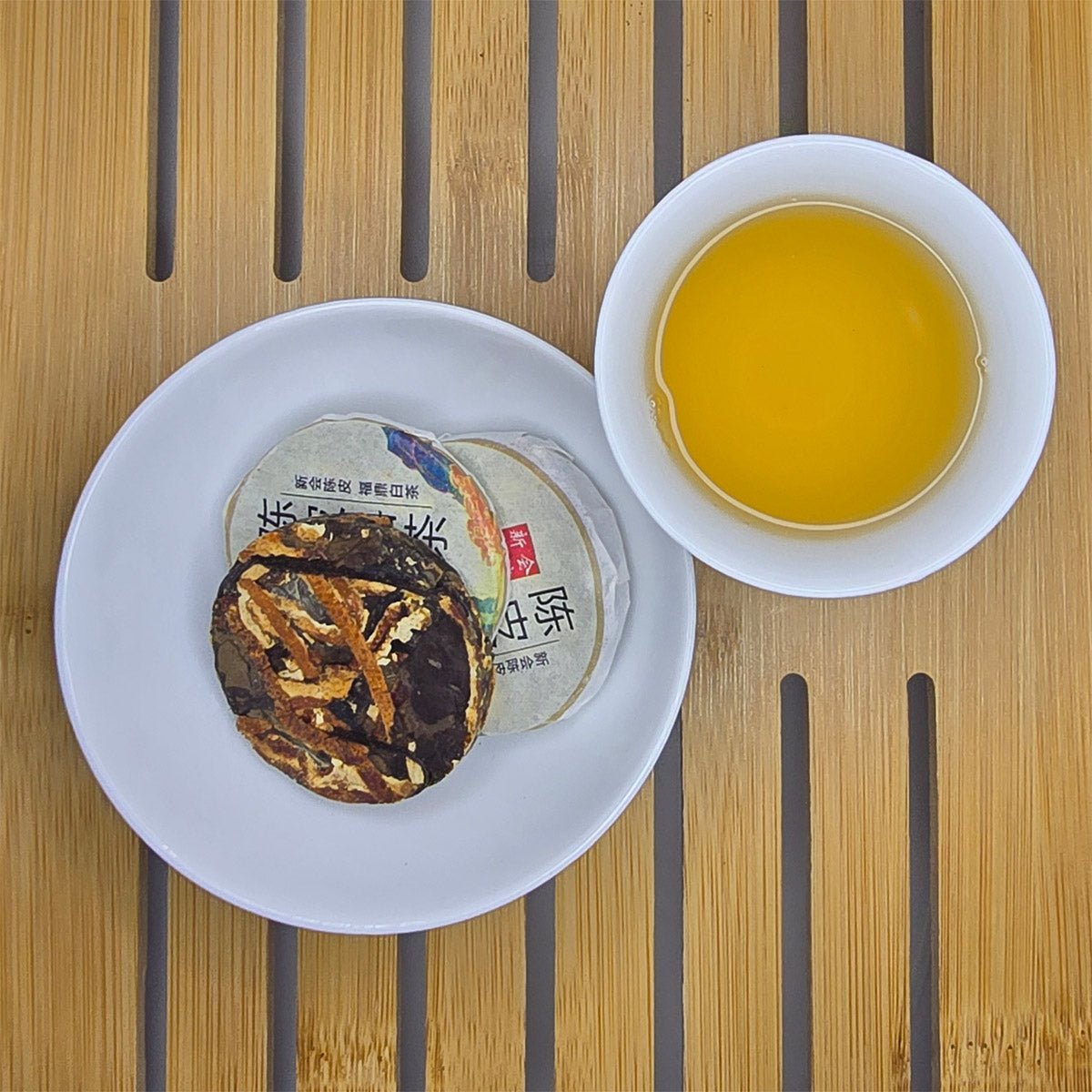
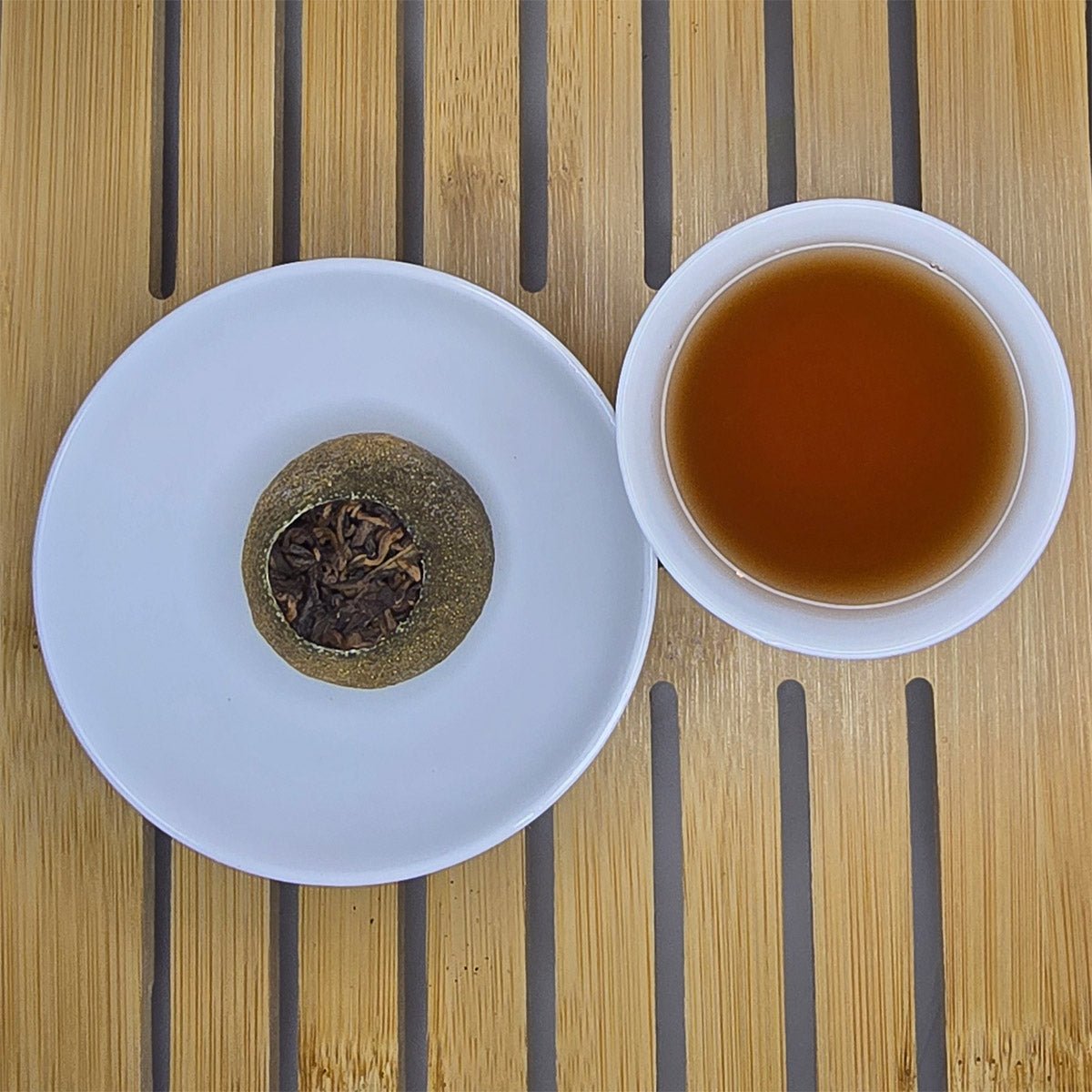
For something different, try our Puer Tea Oranges (Chenpi Xiao Qing Gan). These combine ripe Puer tea with the peel of small green tangerines, creating a distinctive balance of earthy tea and fragrant citrus.
The tea is packed inside the hollowed fruit and dried, allowing the citrus character to become part of the finished tea. The result is a rich, smooth infusion with a refreshing aromatic finish.
How to Brew Black Tea and Puer Tea
Both black tea and Puer can be prepared using a conventional teapot or infuser. Puer is also particularly well suited to gongfu brewing, which uses more leaves, smaller quantities of water and several short infusions.
Brewing Chinese Black Tea
As a starting point, use approximately 2–3g of loose leaf black tea per 200ml of water. Water temperatures around 90–95°C and a brewing time of 2–4 minutes work well for many varieties.
Adjust the steeping time to suit the tea and your preferred strength. More delicate black teas may benefit from a slightly shorter infusion.
Brewing Puer Tea
For a simple preparation, use around 3–5g of Puer tea per 200–250ml of water. Ripe Puer generally responds well to water at 95–100°C, with an initial steep of approximately 2–4 minutes.
For gongfu brewing, use a higher proportion of leaves in a small gaiwan or teapot and begin with short infusions, gradually increasing the steeping time. Many Puer teas can be brewed repeatedly, with their flavour changing between infusions.
Raw Puer can vary considerably in strength and astringency, so it is worth following the recommendations for the particular tea you choose.
Frequently Asked Questions About Black and Puer Tea
Is Puer tea the same as black tea?
No. Although both can produce dark-coloured infusions, Puer and conventional black tea are processed differently. Black tea develops much of its character through oxidation, while Puer may undergo microbial fermentation and, in some cases, extended ageing.
What does Puer tea taste like?
Raw Puer can be fresh, floral, fruity and slightly astringent, particularly when young. Ripe Puer is generally darker and smoother, with earthy, woody and sometimes cocoa-like flavours. Age, origin and processing all influence the final taste.
Does Puer tea contain caffeine?
Yes. Puer is made from the tea plant and naturally contains caffeine. The amount in your cup depends on the leaves, the quantity used and how the tea is brewed. Ageing does not make Puer caffeine-free.
Does Puer tea improve with age?
Some Puer teas can develop more complex and rounded flavours over time, particularly raw Puer stored under suitable conditions. However, ageing does not automatically improve every tea. The original quality of the leaves, processing and storage conditions all matter.
Can you brew Puer tea more than once?
Yes. Puer is particularly well suited to multiple infusions, especially when prepared gongfu style. Each steep can reveal different aspects of the tea's flavour and aroma.
How should I store Puer tea?
Keep Puer away from direct sunlight, excessive heat, moisture and strong odours. Unlike many other teas, Puer intended for ageing is often stored in breathable packaging rather than completely airtight containers. A clean, stable environment is particularly important for long-term storage.