








2014 Wild Liubao Tea Aged Guangxi Dark Tea
Available in stock (200)
2014 Wild Liubao Tea – Aged Guangxi Dark Tea
2014 Wild Liubao Tea belongs to the venerable tradition of Chinese dark teas known as Liubao Tea (六堡茶), named after the ancient town of Liubao in Guangxi. With a heritage stretching back centuries, Liubao has long been prized for its unique fermentation, ageing potential, and rich, mellow character.
This particular batch, harvested from wild or semi-wild large-leaf tea trees, underwent the characteristic Liubao processing: withering, rolling, then wet-pile fermentation (wo dui), followed by careful drying and long-term ageing. This Dark Tea does not just look amazing, its taste is rich and mellow with real depth.
After just over a decade of natural maturation, the tea has developed a deep, mellow, and richly layered flavour profile, earthy, woody, slightly mossy, with an aged-tea character that unfolds slowly with each infusion. The ageing process smooths out bitterness and sharpness, giving a soft, rounded mouthfeel and a sweet-wood aftertaste, which many dark tea aficionados prize.
Origin: Liubao region, Cangwu County/Wuzhou City, Guangxi Province, China
Tea Type: Dark Tea (Hei Cha/Liubao Cha), Post-Fermented & Aged Tea
Vintage: 2014 (approx. 11+ years aged)
Leaf Material: Wild / Large-leaf tea varietal from the Guangxi hills
Tasting Notes
| Attribute | Description |
|---|---|
| Aroma | Earthy, damp-wood, forest floor, mild moss and aged cellar notes |
| Flavor | Rich and mellow, woody-earth bottom notes, gentle sweetness, subtle malt or grain-like depth |
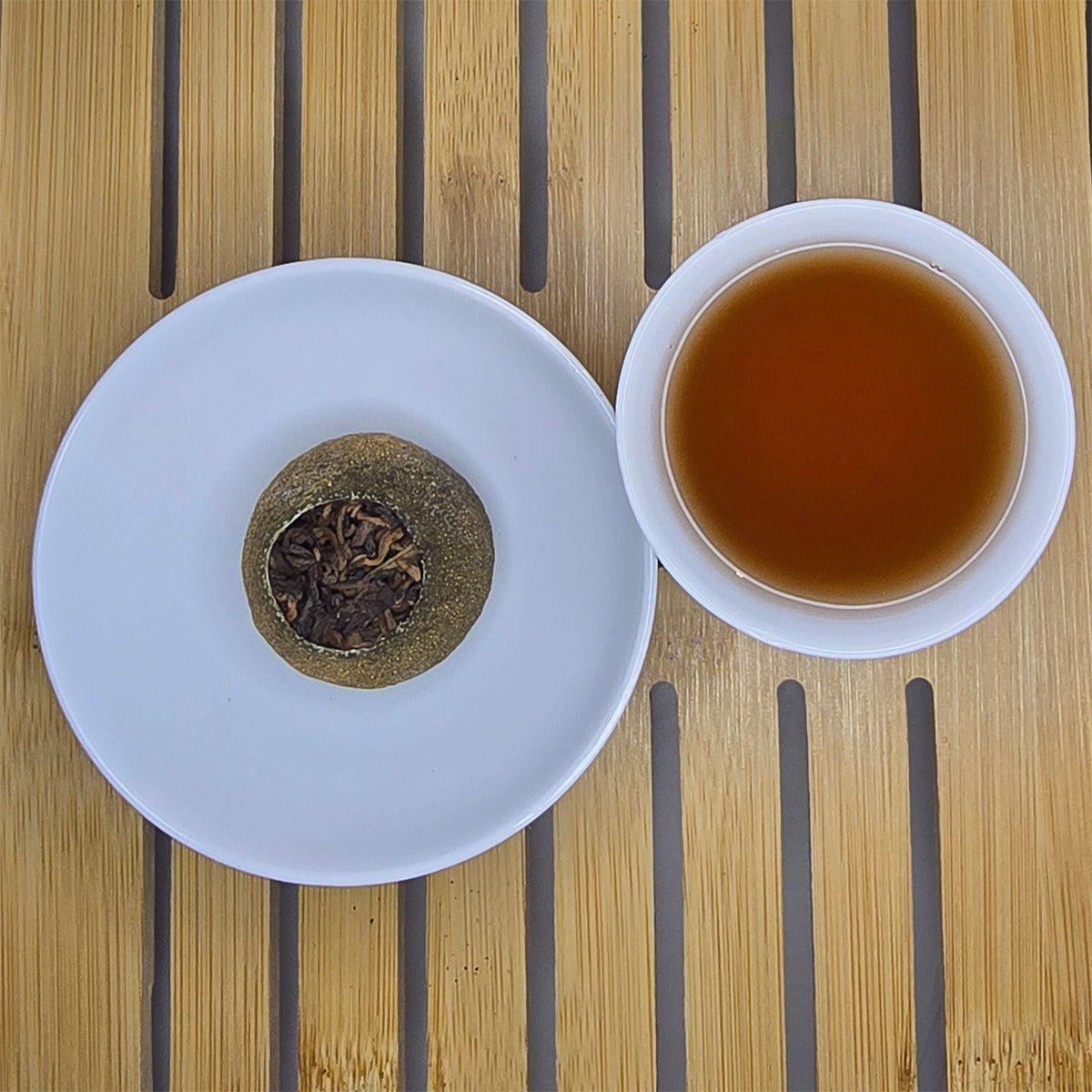
| Liquor Color | Dark red-brown to deep amber — clear and smooth |
| Mouthfeel | Full-bodied yet soft, rounded, warming, with a lingering aged sweetness |
Why This Tea Is Special
Wild-leaf originates from the Guangxi hills — adds natural depth and complexity.
2014 vintage — aged over 10 years under proper conditions, allowing full maturation.
Classic Liubao fermentation & storage tradition — yielding mellow, smooth, richly aged character.
Post-fermented dark tea — ideal for fans of Puer/aged teas, but with its own distinctive Guangxi profile.
Versatile brewing — equally satisfying as a simple daily tea or a contemplative, multi-infusion session.
Brewing Guide
Suggested Method: Traditional Gongfu or simple pot brewing
- Tea-to-water ratio: 5–6g per 200–250ml
- Water temperature: 95–100°C (203–212°F)
- First infusion: 2–3 minutes (or 10–15 sec for quick rinse)
- Subsequent infusions: 3–5+ minutes. Liubao typically withstands multiple infusions with evolving depth.
Tip: Use a clay pot or Yixing-style teaware to bring out woody and earthy layers; allow a brief rinse to awaken aroma before the first full brew.
Health & Wellness Notes (Traditional & Commonly Believed)
- Often consumed for digestive support, especially after heavy meals.
- Believed to help balance internal dampness and aid metabolism, a traditional reason for its popularity among southern Chinese emigrants in humid climates.
- Smooth, mellow, and low-irritation due to extended fermentation, suitable for regular daily drinking, including for those sensitive to bitterness.
Storage & Ageing Potential
This 2014 Wild Liubao has already developed rich ageing character, but like fine teas, it can continue to mature gracefully if stored in a cool, dry, ventilated place, away from strong odours and direct sunlight. Over time, the aroma may deepen, the mouthfeel soften further, and sweetness might become more pronounced, enhancing complexity and making it a worthy long-term tea investment.
Couldn't load pickup availability
Your payment information is processed securely. We do not store credit card details nor have access to your credit card information.
