








Wild Zirantuo Ripe Puer Old Tea
Available in stock (115)
Wild Zirantuo Ripe Puer Tea – Naturally Formed Menghai Tea Lumps
Deep, smooth and beautifully mellow, with earthy richness, woody warmth and a lingering natural sweetness. Our Wild Zirantuo Ripe Puer Old Tea is a distinctive Shou (ripe) Puer from Menghai County in Xishuangbanna, Yunnan Province, China.
Unlike conventional loose-leaf Puer or tea that has been deliberately pressed into cakes and bricks, this selection is presented as dense, naturally formed clusters of fermented tea leaves. During ripe Puer production, leaves can bind together under the warmth, moisture and pressure of the fermentation pile, creating compact, irregular lumps with a distinctive brewing character.
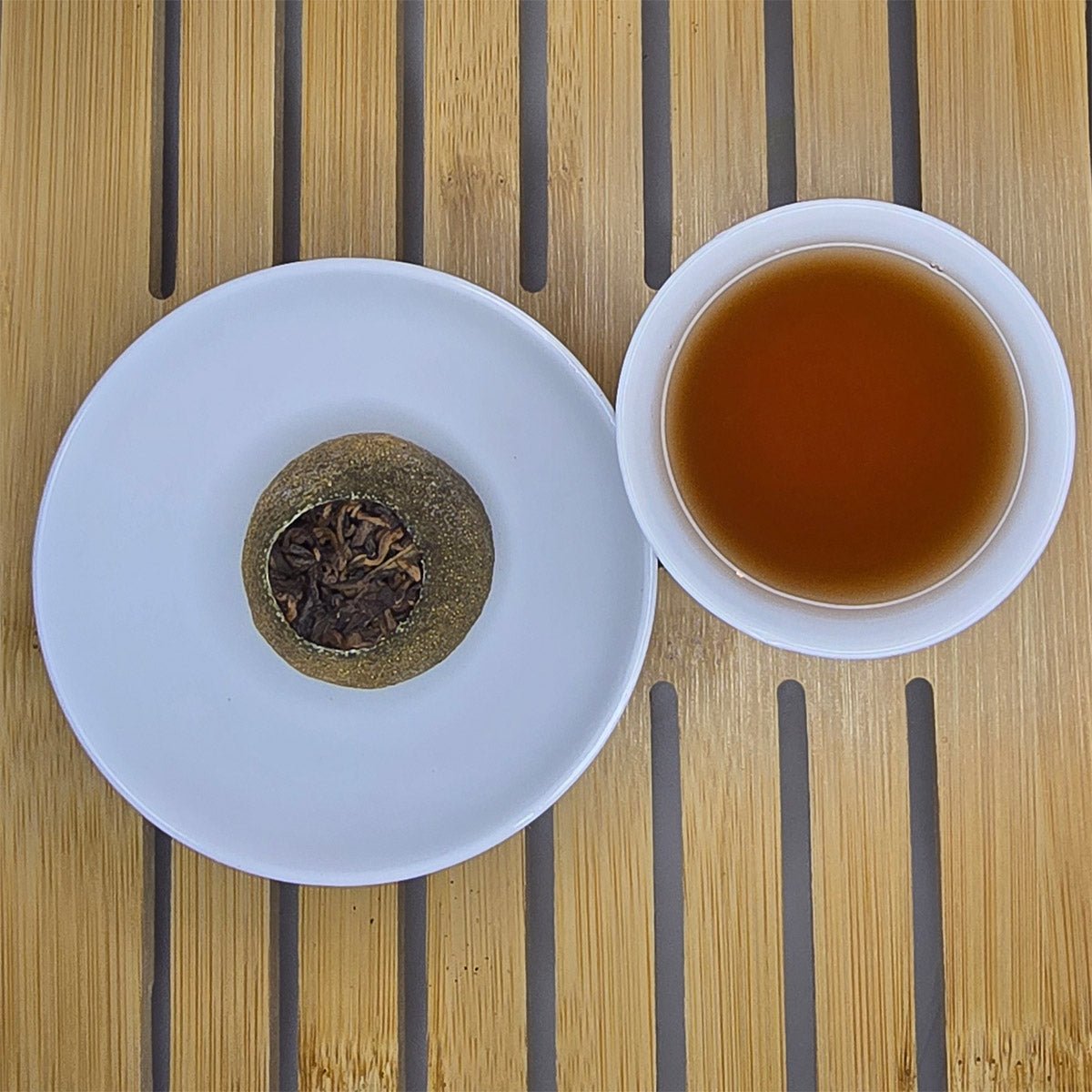
The tea is described as being made from wild ancient-tree material harvested in April. Following fermentation and ageing, the finished tea offers a deep reddish-brown infusion, an earthy and woody aroma, and a rich yet silky mouthfeel.
Its character is rounded and reassuring rather than sharp. The flavour is full-bodied, with gentle sweetness developing alongside mellow wood and soft earthiness. The compact lumps release their flavour gradually, making the tea particularly enjoyable over a series of short Gongfu infusions.
For anyone who enjoys traditional ripe Puer and wants to explore an unusual leaf format, Wild Zirantuo offers a rewarding and memorable tea experience.
Origin: Menghai County, Xishuangbanna, Yunnan Province, China
Tea Type: Shou (Ripe) Puer Tea
Product Name: Wild Zirantuo Ripe Puer Old Tea
Leaf Source: Wild Ancient-Tree Material
Harvest: April
Processing: Ripe Puer Fermentation and Ageing
Form: Dense, Naturally Formed Fermented Tea Lumps
Aroma: Earthy, Woody and Slightly Sweet
Flavour: Rich, Mellow and Smooth
Liquor Colour: Deep Reddish-Brown
Mouthfeel: Full-Bodied and Silky
Caffeine: Naturally Contains Caffeine
Pack Sizes: 50g, 125g and 250g
What Makes Wild Zirantuo Ripe Puer Special?
The defining feature of this tea is its unusual form. Instead of loose, separate leaves or a deliberately pressed brick, Wild Zirantuo consists of dense clusters that develop naturally during fermentation.
This compact structure influences the way the tea brews. The lumps take time to absorb water and loosen, gradually releasing their earthy, woody character. Early infusions can be relatively gentle, while later rounds often develop more depth and body.
Menghai origin: The tea comes from Menghai County, one of Yunnan's best-known regions for ripe Puer production.
Wild-tree sourcing: The product specification describes the use of wild ancient-tree leaves, giving this selection a specialist provenance story.
Natural lump formation: The tea is presented as fermented leaf clusters rather than an intentionally pressed cake or brick.
Smooth flavour: Expect mellow earthiness, woody warmth and a lingering sweetness.
Repeated brewing: The compact clusters are particularly suited to multiple Gongfu infusions as they gradually open.
It is a fascinating tea for drinkers who appreciate how processing and leaf structure can influence the brewing experience.
From Menghai County, Yunnan – A Centre of Ripe Puer Tea
Menghai County lies within Xishuangbanna Prefecture in southern Yunnan Province, China. The area has a long association with Puer tea and is especially well known for its contribution to modern ripe Puer production.
Yunnan is the traditional home of Puer, a tea category made from suitable tea material and processed into raw (Sheng) or ripe (Shou) styles.
Shou Puer undergoes a controlled fermentation process that develops its characteristic dark colour, earthy depth and mellow flavour. The result is very different from the bright, sometimes brisk character of young raw Puer.
Our Wild Zirantuo comes from the Menghai area and is described as using wild ancient-tree material. The original product specification does not identify a particular village, mountain, tea garden or verified tree age.
Its most distinctive characteristics are therefore the stated Menghai origin, natural fermented-lump format and smooth, full-bodied drinking profile.
For lovers of Yunnan tea, it offers an interesting way to explore the relationship between region, fermentation and flavour.
What Are Naturally Formed Puer Tea Lumps?
During the production of ripe Puer, prepared tea leaves undergo a controlled fermentation process known as wo dui, or wet-pile fermentation.
The leaves are gathered into moist piles and carefully managed as warmth, microbial activity and chemical changes transform their colour, aroma and flavour.
Under these conditions, some leaves can bind together into dense clusters. The resulting lumps are irregular in shape and more compact than ordinary loose-leaf tea.
In the wider world of Puer, naturally formed ripe-tea clusters are often discussed under the term Lao Cha Tou, meaning "old tea heads". This is a recognised tea style associated with wet-pile fermentation.
Wild Zirantuo is described as a naturally clumped ripe Puer, although its exact Chinese naming and relationship to Lao Cha Tou should be confirmed with the producer.
What matters most to the brewing experience is the compact leaf structure. Because the tea is tightly clustered, water takes longer to reach the centre of each lump. The flavour can therefore develop gradually over successive infusions.
This makes the tea especially enjoyable for Gongfu brewing, where short repeated steeps allow you to appreciate changes in aroma, strength and texture.
How Does Wild Zirantuo Differ from a Puer Tea Brick?
Both Wild Zirantuo and traditional Puer bricks are compact forms of tea, but they are created differently.
A conventional Puer brick is deliberately pressed into a regular shape after the leaves have been processed. You usually need to loosen or break off a portion before brewing.
Wild Zirantuo, by contrast, is described as consisting of lumps that form naturally during the fermentation process. The clusters are irregular rather than uniformly pressed into a mould.
This means you can weigh out a few pieces for your tea session without needing to prise leaves from a larger cake or brick.
The dense lumps may also take longer to open in hot water. Their flavour often develops slowly, rewarding patience and repeated infusions.
If you prefer a traditional compressed format with a more uniform shape, our 2017 Aged Shu Puer Tea Brick is an excellent alternative.
Tasting Notes – Earthy, Woody and Naturally Sweet
| Attribute | Description |
|---|---|
| Aroma | Deep earthiness, mellow wood and gentle natural sweetness |
| Flavour | Rich, smooth and rounded, with woody-earthy depth |
| Liquor Colour | Deep reddish-brown |
| Mouthfeel | Full-bodied, silky and mellow |
| Sweetness | Soft sweetness that lingers after drinking |
| Astringency | Low when brewed to taste |
| Finish | Long, smooth and gently sweet |
The first impression is a mellow, earthy fragrance with a soft woody character. As the tea develops in the cup, its full-bodied texture becomes more apparent.
Despite its dark liquor, the flavour is smooth rather than aggressively bitter. Gentle sweetness balances the earthiness and gives the finish a pleasantly rounded quality.
Successive infusions can bring different balances of wood, depth and sweetness as the dense clusters gradually release their flavour.
It is a satisfying choice for anyone who enjoys dark Chinese teas with a rich texture and a clean, mellow finish.
How to Brew Wild Zirantuo Ripe Puer Tea
Wild Zirantuo is particularly well suited to Gongfu brewing. Because the tea consists of compact lumps, the first infusion may be lighter while the clusters begin to absorb water.
Gongfu Brewing
- Place approximately 5g of Wild Zirantuo in a warmed 150ml gaiwan or small teapot.
- Heat fresh water to 95–100°C.
- Give the tea a brief 5–10 second rinse if desired, then discard the rinse water.
- Steep the first infusion for approximately 10–20 seconds.
- Pour the tea off completely and enjoy.
- Continue with fresh hot water, increasing the brewing time gradually as the lumps open.
The tea can offer approximately 8–10 infusions under suitable Gongfu brewing conditions, depending on the size and density of the lumps and your preferred strength.
If the first infusion tastes particularly light, this is normal for dense tea clusters. Allow the following infusions a little more time rather than immediately using a much larger quantity of tea.
Western-Style Brewing
For a larger teapot, use approximately 4–5g of tea per 250–300ml of water at 95–100°C. Steep for 4–5 minutes, then strain completely.
Because the tea is densely clustered, it may take longer to develop a full flavour than ordinary loose-leaf ripe Puer. Reinfuse the same tea several times if it continues to release flavour.
| Brewing Method | Tea and Water | Suggested Time |
|---|---|---|
| Gongfu – Optional Rinse | 5g / 150ml / 95–100°C | 5–10 seconds |
| Gongfu – First Infusion | 5g / 150ml / 95–100°C | 10–20 seconds |
| Gongfu – Second to Fourth | Same tea, fresh hot water | 20–30 seconds |
| Gongfu – Later Infusions | Same tea, fresh hot water | Increase gradually to taste |
| Western-Style | 4–5g / 250–300ml / 95–100°C | 4–5 minutes |
Brewing tip: A porcelain gaiwan or small clay teapot is particularly suitable for this tea. The compact lumps benefit from repeated infusions and enough space to soften gradually.
There is no need to crush the tea into fine fragments. Weigh out a suitable portion and let the hot water do the work.
Wild Zirantuo vs Other Ripe Puer Teas
Ripe Puer can be enjoyed in several different forms, each offering a slightly different preparation experience.
| Tea | Format | Main Character |
|---|---|---|
| Wild Zirantuo Ripe Puer | Naturally formed fermented tea lumps | Earthy, woody, silky and gently sweet |
| 2017 Aged Shu Puer | 100g compressed brick | Chocolate, nuts, wood and mellow sweetness |
| 2015 Palace Shu Puer | 50g segmented compressed brick | Cocoa, malt and smooth earthy depth |
| 1998 Wild Arbor Ripe Puer | Loose aged Puer material | More mature, layered woody-earthy character |
| Shu Puer Cha Gao | Solid dissolvable tea concentrate | Instant preparation without loose leaves |
Choose Wild Zirantuo if you enjoy a traditional leaf infusion but want to explore the unusual texture and slow-release brewing character of naturally fermented tea clusters.
For a more convenient compressed format, try our 2015 Premium Aged Palace Shu Puer.
If you are interested in a specifically dated older selection, explore our 1998 Wild Arbor Ripe Puer Tea.
Why Choose Wild Zirantuo Ripe Puer?
- Menghai origin: From Xishuangbanna, Yunnan, an important ripe Puer-producing region.
- Wild-tree material: Described as made from wild ancient-tree leaves.
- Natural tea lumps: Dense clusters formed during fermentation rather than deliberately pressed into a brick.
- Traditional Shou Puer: Fermented for a dark, mellow flavour.
- Earthy and woody aroma: A classic ripe Puer tasting profile.
- Silky mouthfeel: Full-bodied yet smooth.
- Lingering sweetness: Gentle sweetness balances the rich flavour.
- Deep reddish-brown liquor: Attractive dark infusion.
- Multiple infusions: Suitable for approximately 8–10 Gongfu brews.
- Three pack sizes: Available in 50g, 125g and 250g.
Ingredients
Shou (ripe) Puer tea leaves (Camellia sinensis).
Storage Recommendations
Store Wild Zirantuo Ripe Puer in a clean, dry, odour-free environment away from direct sunlight, excessive heat and moisture.
For everyday drinking, keep the tea in suitable packaging that protects it from dust and strong surrounding aromas while avoiding damp conditions.
Puer tea can change during storage, but further ageing does not guarantee an improvement in flavour. This selection is already ready to enjoy.
Use clean, dry utensils when handling the tea and reseal the packaging after each use.
Discover the Unique Character of Wild Zirantuo
Wild Zirantuo Ripe Puer Old Tea offers a fascinating expression of traditional Yunnan tea. Its naturally formed fermented clusters, deep reddish-brown liquor and smooth earthy-woody flavour make it a rewarding choice for Puer enthusiasts.
Unlike a conventional pressed cake, the dense lumps gradually release their flavour over repeated infusions, creating a slow and enjoyable brewing experience.
For another aged ripe Puer selection, explore our 2017 Aged Shu Puer Tea Brick or 2015 Premium Aged Palace Shu Puer.
To discover a much older wild-arbor selection, try our 1998 Wild Arbor Ripe Puer Tea.
If you prefer ripe Puer that dissolves instantly without a strainer, our Fuzi Aged Yunnan Shu Puer Cha Gao offers a different preparation experience.
Browse our Black and Puer Tea Collection or Premium & Rare Loose-Leaf Teas to explore more Chinese tea styles.
Couldn't load pickup availability


Your payment information is processed securely. We do not store credit card details nor have access to your credit card information.
