2015 Premium Aged Palace Shu Puer Tea – 50g Gong Ting Brick
Rich, velvety and beautifully mellow, with the convenience of a chocolate-bar-style tea brick. Our 2015 Premium Aged Palace Shu Puer Tea comes from Menghai County in Yunnan Province, China, a region renowned for its traditional Puer tea production.
Harvested in 2015 and pressed into a compact 50g brick in 2021, this Gong Ting, or Palace Grade, ripe Puer combines finely graded tea leaves with the deep, rounded flavour that makes aged Shu Puer so enjoyable.
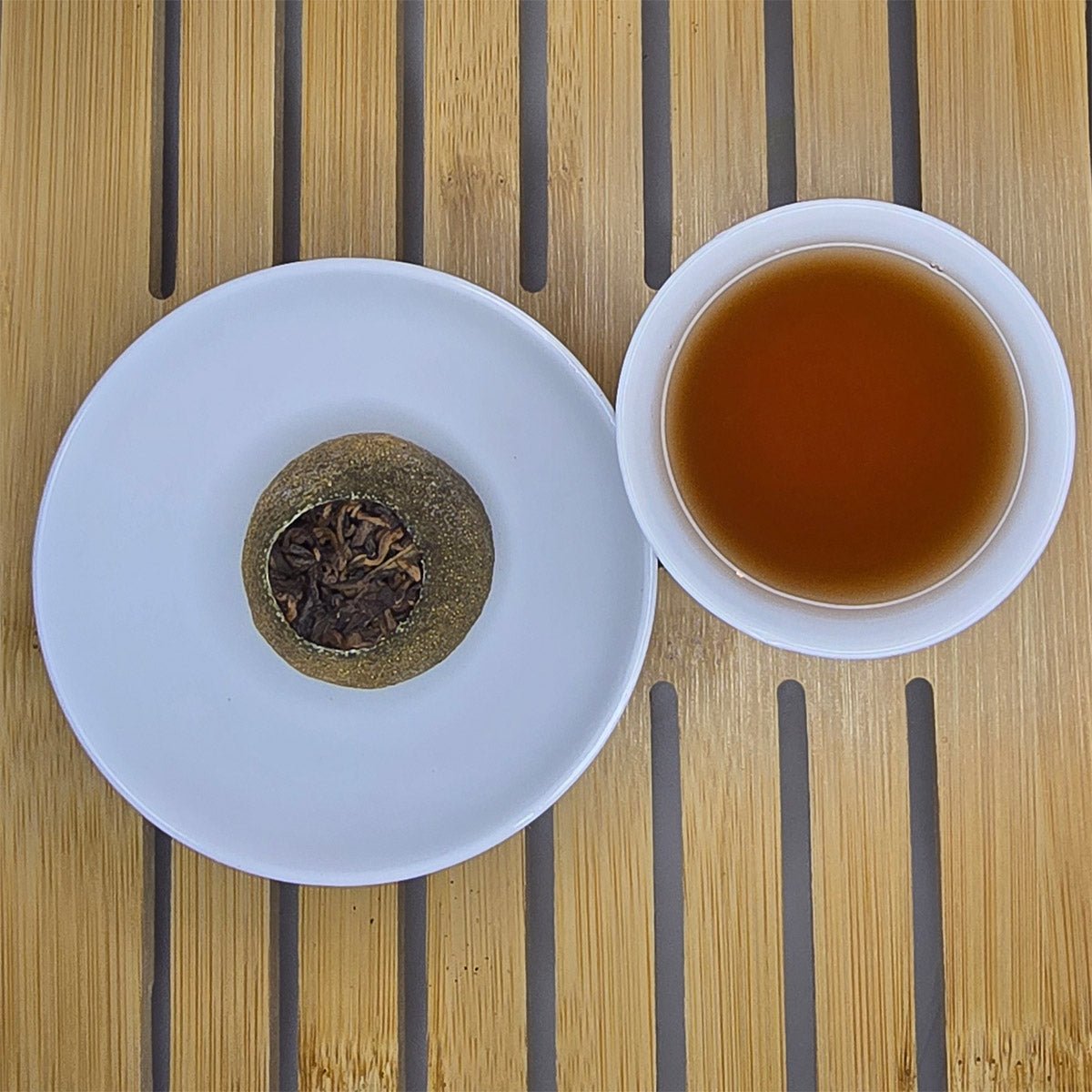
The dark infusion reveals notes of cocoa, smooth malt, polished wood and gentle earthy sweetness. It has a satisfyingly full body and a soft, velvety texture, with very little bitterness when brewed to taste.
One of its most appealing features is the practical shape. The brick is pressed like a chocolate bar, making it easy to break into approximately 6.25g portions. Each portion is well suited to a Gongfu brewing session, allowing you to enjoy several infusions without having to break into a large Puer cake.
Whether you are new to ripe Puer or already appreciate aged Yunnan tea, this is an inviting selection for slow, thoughtful brewing.
Origin: Menghai County, Yunnan Province, China
Tea Type: Shu (Ripe) Puer Tea
Grade: Gong Ting (Palace Grade)
Harvest Year: 2015
Pressing Year: 2021
Format: 50g Compressed Tea Brick
Portioning: Approximately Eight 6.25g Segments per Brick
Flavour: Cocoa, Malt, Wood, Earthy Depth and Gentle Sweetness
Mouthfeel: Full-Bodied, Smooth and Velvety
Caffeine: Naturally Contains Caffeine
Pack Options: One, Five or Ten 50g Bricks
What Makes This 2015 Palace Shu Puer Special?
This tea brings together three distinctive features: a documented 2015 harvest, fine Gong Ting leaf grading and an unusually convenient segmented brick.
A 2015 harvest: The leaves were harvested in 2015, giving this selection a clearly identified vintage. For enthusiasts exploring aged Puer, a stated harvest year provides useful context about the tea's history.
Palace Grade leaf material: Gong Ting refers to a fine grade of ripe Puer, traditionally associated with small, tender buds and young leaves. These finer leaves can produce a particularly smooth, refined infusion while retaining the depth of Shu Puer.
A practical 50g brick: Instead of a large compressed cake, this tea is pressed into a small bar divided into manageable portions. You can break off a segment, prepare your tea and store the remainder for another day.
Traditional Menghai origin: Menghai County is one of Yunnan's best-known Puer-producing areas, with a long association with ripe Puer processing.
Together, these details make the tea a compelling choice for anyone looking for a well-defined aged ripe Puer without committing to a much larger cake.
Harvested in 2015, Pressed in 2021 – Understanding the Dates
The two dates associated with this tea describe different stages in its production.
2015 is the harvest year. It identifies when the tea leaves were picked.
2021 is the pressing year. It identifies when the prepared tea was compressed into its present 50g chocolate-bar-style brick.
This distinction is important because Puer can be stored as loose material before being pressed into a cake or brick. The harvest date and pressing date therefore do not always match.
Our Premium Aged Palace Shu Puer has been matured to develop a rich, rounded character, with dark earthy notes and a smooth finish. Its compact format makes it convenient to enjoy now while also being easy to store.
As with other aged teas, the way Puer develops depends on the quality of the tea and the conditions in which it is kept. The flavour of this selection is already approachable and satisfying, so there is no need to wait before brewing it.
What Does Palace Grade (Gong Ting) Mean?
Palace Grade, also known as Gong Ting (宫廷), is a traditional grading term used for certain ripe Puer teas. It generally refers to a fine leaf grade containing small, tender buds and young leaves.
The name sounds grand, but it is primarily a description of the tea material rather than proof of an imperial connection.
Compared with coarser grades of ripe Puer, finer Gong Ting material can produce an infusion with a smooth texture, concentrated flavour and a clean, lingering finish.
Our 2015 Palace Shu Puer displays the rich character expected of ripe Puer while remaining pleasantly mellow. Its cocoa, malt and woody notes are supported by a gentle sweetness rather than sharp bitterness.
For customers exploring the differences between Puer grades, this tea offers a particularly enjoyable introduction to the Gong Ting style.
From Menghai County, Yunnan – The Home of Ripe Puer
Menghai County lies in Xishuangbanna, in southern Yunnan Province, China. The area is closely associated with Puer tea production and is particularly well known for its ripe Puer traditions.
Puer is made from tea grown in Yunnan and is commonly divided into two broad styles: Sheng, or raw Puer, and Shu, or ripe Puer.
Sheng Puer is processed differently and may develop considerably over years of storage. Shu Puer undergoes a controlled post-fermentation process, often called wet-pile fermentation, which helps develop its characteristic dark colour and mellow, earthy flavour.
Ripe Puer became established in its modern form during the 1970s. The process was developed to produce a smoother, more mature-tasting tea without requiring the same lengthy transformation traditionally associated with ageing raw Puer.
Our Palace Shu Puer belongs to this rich Yunnan tradition. Its fine leaf grade, identified harvest year and careful compression give it a distinctive place within the wider world of fermented Chinese teas.
A Chocolate-Bar-Style Puer Brick – Easy to Portion and Brew
Large Puer cakes can be enjoyable to collect and explore, but they are not always convenient when you simply want a small amount of tea.
This 50g brick solves that problem with its clever segmented shape. Pressed in a style reminiscent of a chocolate bar, it can be broken into portions of approximately 6.25g.
Each segment provides a useful starting quantity for Gongfu brewing, particularly in a small gaiwan or teapot.
The shape also makes the tea easy to store, carry and share. You can prepare a portion at home, take one on a trip or introduce a friend to traditional ripe Puer without having to break up a large compressed cake.
For the best results, separate a segment gently and allow the compressed leaves enough room to open during brewing. Avoid crushing the leaves unnecessarily, as smaller fragments can produce a stronger, more astringent infusion.
Tasting Notes
| Attribute |
Description |
| Aroma |
Deep earth, cocoa, mellow wood and soft malty notes |
| Flavour |
Rich, rounded and gently sweet, with cocoa and woody undertones |
| Liquor Colour |
Deep reddish-brown to dark brown, depending on brewing strength |
| Mouthfeel |
Full-bodied, smooth and velvety |
| Bitterness |
Very low when brewed to taste |
| Finish |
Soft earthy sweetness with lingering malt and wood |
This is a tea with plenty of depth but without an aggressive edge. The first sip brings rich, dark flavours reminiscent of cocoa and wood, followed by smooth malt and a soft natural sweetness.
Its velvety texture gives the infusion a satisfying body, making it particularly enjoyable when brewed in several small rounds.
As the compressed leaves gradually loosen, successive infusions can reveal different balances of earthy richness, gentle sweetness and warming woody notes.
How to Brew 2015 Palace Shu Puer Tea
This tea is particularly well suited to Gongfu brewing, although it also makes a lovely cup in a conventional teapot.
The brick's approximately 6.25g segments are a convenient starting point for either method.
Gongfu Brewing
- Break off approximately one 6.25g segment from the brick.
- Place the tea in a warmed gaiwan or small teapot.
- Add 100–120ml of water heated to 95–100°C.
- Give the leaves a brief rinse if desired, then discard the rinse water.
- Begin with a 10–15 second infusion and pour the tea off completely.
- Continue with fresh hot water, gradually increasing the brewing time as the leaves open.
Western-Style Brewing
For a larger cup, place approximately 6.25g of tea in a teapot or roomy infuser. Add 250–300ml of water at 95–100°C and steep for 2–4 minutes, adjusting to your preferred strength.
| Brewing Method |
Tea and Water |
Time |
| Gongfu – First Infusion |
6.25g / 100–120ml / 95–100°C |
10–15 seconds |
| Gongfu – Second to Fourth Infusions |
Same leaves and water temperature |
Increase gradually to taste |
| Gongfu – Later Infusions |
Same leaves, fresh hot water |
Extend as flavour becomes lighter |
| Western-Style |
6.25g / 250–300ml / 95–100°C |
2–4 minutes |
| Second Western Infusion |
Reuse the leaves with fresh hot water |
Steep slightly longer if needed |
Brewing tip: Because the tea is compressed, the first infusion may be lighter while the leaves begin to separate. Avoid extending the initial steep too much; the flavour will develop naturally as the brick opens.
A porcelain gaiwan is ideal if you want to observe the leaves and compare successive infusions. A small clay teapot can also be enjoyable for regular ripe Puer brewing.
2015 Palace Shu Puer vs 2017 Aged Shu Puer Brick
Both teas offer the rich, smooth character of ripe Yunnan Puer, but they differ in format, vintage and leaf selection.
| Feature |
2015 Palace Shu Puer |
2017 Aged Shu Puer Brick |
| Harvest Year |
2015 |
2017 vintage |
| Leaf Grade |
Gong Ting (Palace Grade) |
Selected ripe Puer material |
| Format |
50g segmented brick |
100g compressed brick |
| Flavour |
Cocoa, malt, wood and gentle earthy sweetness |
Woody, nutty and chocolate-like notes |
| Main Appeal |
Fine leaf grade and convenient approximately 6.25g portions |
Larger brick with a rounded, aged ripe Puer character |
If you enjoy the smooth character of this Palace Grade tea but would like to explore a larger compressed format, discover our 2017 Aged Shu Puer Tea Brick – 100g.
Key Features
-
2015 harvest: A clearly identified vintage from Yunnan Province.
-
Pressed in 2021: The harvest and compression dates are documented separately.
-
Menghai origin: Sourced from a renowned Puer-producing county.
-
Gong Ting grade: Fine, tender leaf material associated with Palace Grade ripe Puer.
-
Convenient 50g brick: Easy to store and portion.
-
Chocolate-bar-style design: Breaks into approximately 6.25g segments.
-
Rich tasting profile: Cocoa, smooth malt, wood and mellow earthiness.
-
Velvety mouthfeel: Full-bodied yet soft, with very little bitterness.
-
Multiple infusions: Particularly enjoyable when brewed Gongfu style.
-
Flexible pack sizes: Choose one, five or ten bricks.
Ingredients
Shu (ripe) Puer tea leaves (Camellia sinensis).
How to Store Your Aged Puer Brick
Keep the tea in a clean, dry, odour-free place away from direct sunlight, excessive heat and moisture.
Puer is often stored in breathable wrapping rather than in a completely airtight container, particularly when intended for longer-term ageing. The important considerations are a stable environment, protection from damp conditions and separation from strong surrounding smells.
If you plan to drink the tea regularly, keep the remaining brick wrapped and protected from kitchen odours. Avoid refrigeration, condensation and humid storage conditions.
The tea is ready to enjoy now. Further storage may change its character, but improvement with age is never guaranteed.
Discover the Pleasure of Aged Palace Shu Puer
Our 2015 Premium Aged Palace Shu Puer brings together fine Gong Ting leaf material, a clearly identified Menghai origin and a wonderfully practical 50g segmented brick.
Its rich cocoa, malt and woody notes, velvety texture and gentle sweetness make it a satisfying choice for both experienced Puer drinkers and customers discovering the mellow side of fermented Chinese tea.
Break off a segment, warm your gaiwan and enjoy the changing flavour across several infusions. It is a simple, rewarding way to experience traditional aged ripe Puer.
To explore other compressed teas, discover our 2017 Aged Shu Puer Tea Brick or our Puer Tea Oranges (Xiao Qing Gan), which pair ripe Puer with fragrant dried tangerine peel.
If you prefer the convenience of tea concentrate, try our Fuzi Aged Yunnan Shu Puer Cha Gao.
Browse more selections in our Puer Tea Collection and Compressed Tea Collection.
![History of Compressed Tea - Ancient Tea Bricks and Cakes]()
Discover the History Behind Your Tea
History of Compressed Tea:
Ancient Tea Bricks & Cakes
For centuries, Chinese tea was pressed
into beautiful cakes and bricks,
carried along ancient trading routes
and even exchanged as currency.
Discover the fascinating history
of compressed tea, from the Tang
dynasty to today's traditional
Puer tea cakes.
Read the Full Story →