








8-Year-Old, Three Treasures, Chen Pi White Tea
Available in stock (26)
✌🏼 Free Shipping on all orders over £49!
8-Year-Old Three Treasures Chen Pi White Tea – Aged Shou Mei & Xinhui Tangerine Peel
Rich aged mandarin, mellow honey, dried fruit and gentle caramel sweetness. Discover our 8-Year-Old Three Treasures Chen Pi White Tea, a beautifully aromatic Chinese tea blend combining aged Fujian Shou Mei white tea with fragrant Xinhui tangerine peel, carefully gathered into individual bundles with a natural rice stalk.
Known as Three Treasures Tea, this traditional combination brings together three simple elements: white tea, aged citrus peel and a rice-stalk tie. The result is a distinctive tea with a wonderfully rounded flavour, elegant presentation and a rich connection to Chinese tea culture.
Our eight-year-aged Shou Mei has developed a deeper, mellower character than a youthful white tea. Its gentle floral freshness has given way to notes of dried fruit, warm meadow hay, honey and soft caramel.
The aged Xinhui Chen Pi adds another layer of complexity. Made from dried tangerine peel, Chen Pi is valued for its distinctive fragrance, which can become richer and less sharply citrusy with suitable ageing. In this blend, it brings warm mandarin, gentle spice and a lingering aromatic finish.
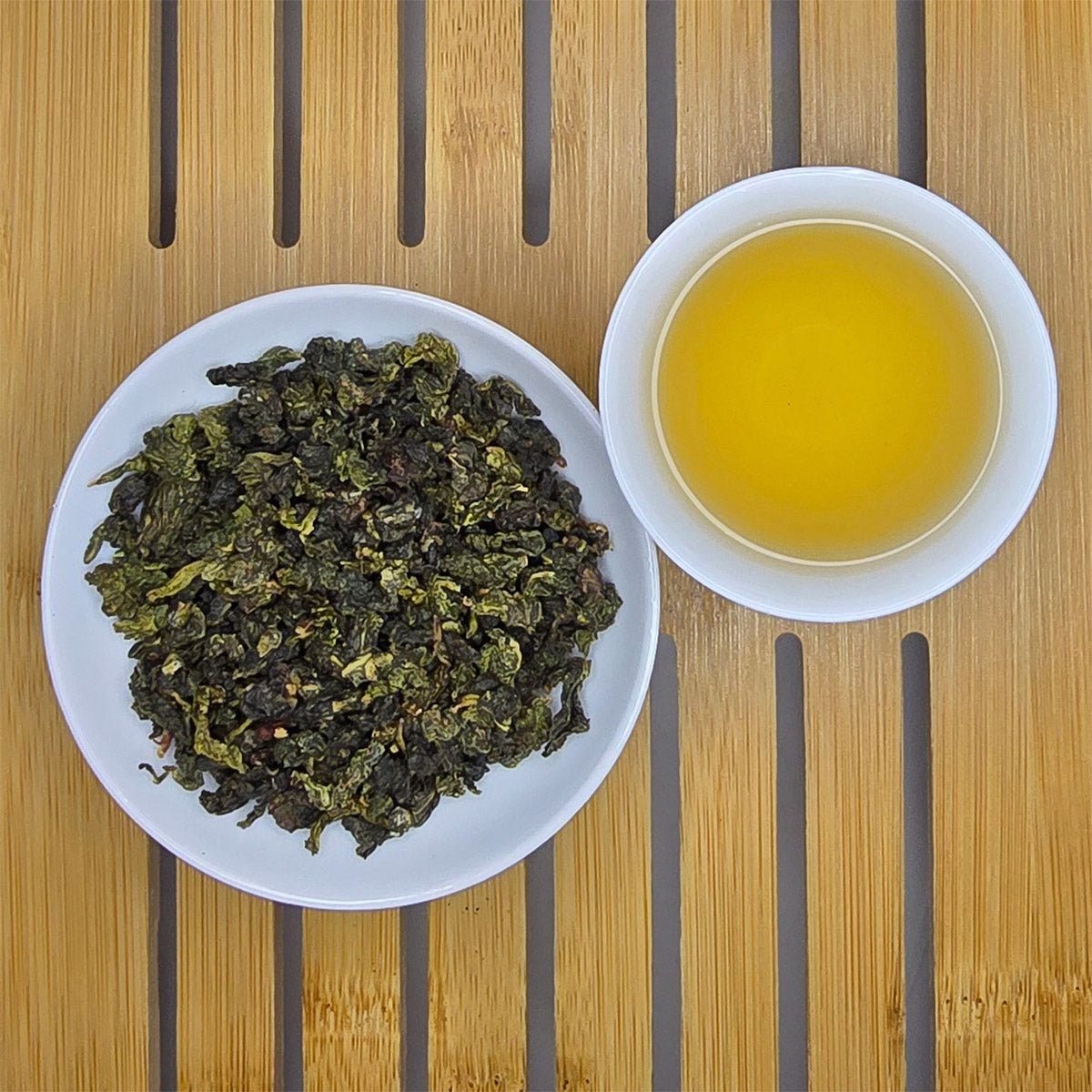
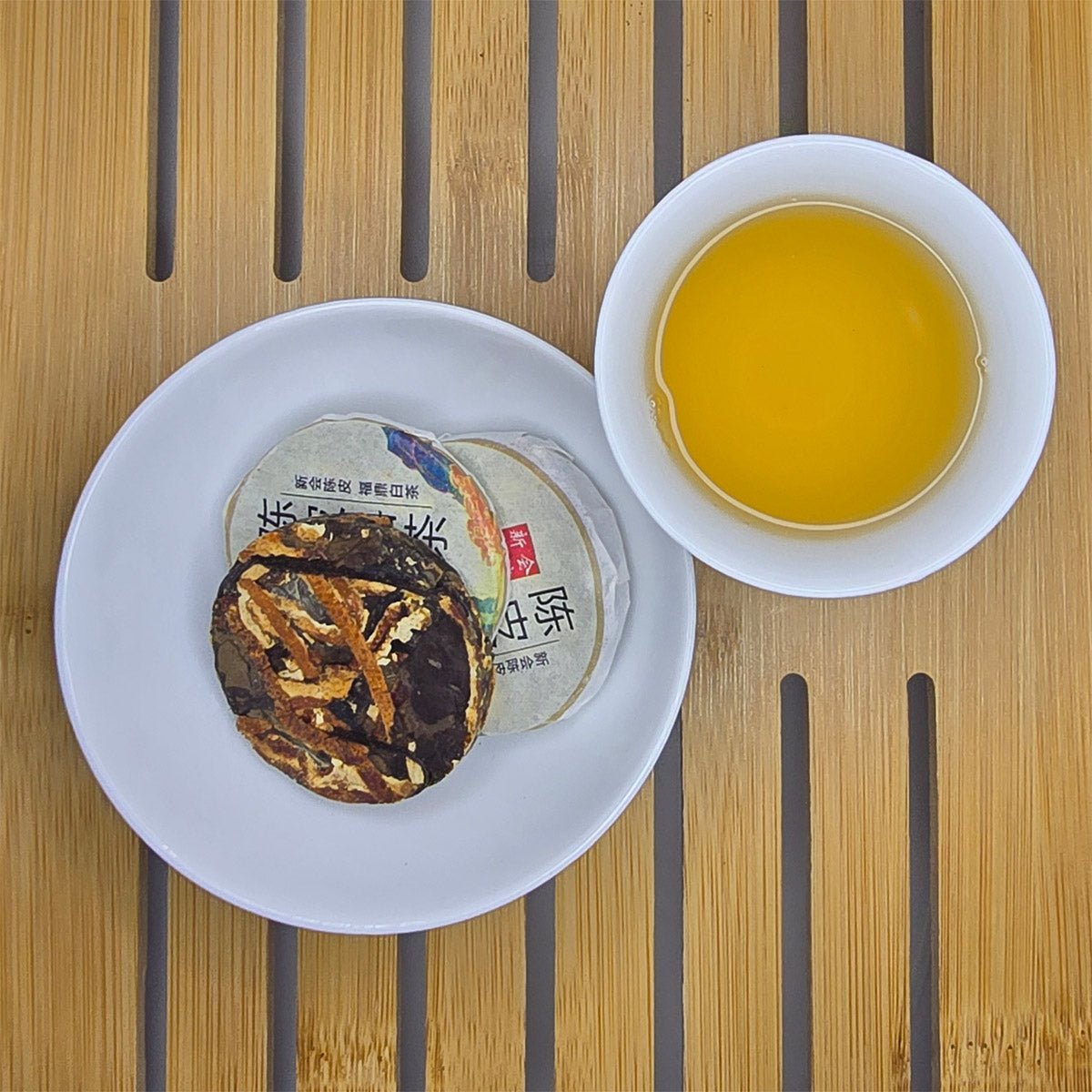
As the bundle infuses, the white tea and citrus peel gradually open, releasing a deep amber-gold liquor with a smooth, rounded mouthfeel. The tea is naturally sweet in character, with a pleasing balance of mellow fruit, aged citrus and soft herbal warmth.
Whether enjoyed after a meal, shared during a traditional tea session or brewed slowly on a quiet afternoon, Three Treasures offers a distinctive alternative to conventional white tea.
Tea Name: 8-Year-Old Three Treasures Chen Pi White Tea
Also Known As: Three Treasures Tea / San Bao Cha
Tea Category: Aged White Tea Blend with Tangerine Peel
White Tea Base: Aged Shou Mei
White Tea Origin: Fujian Province, China
Citrus Ingredient: Aged Xinhui Chen Pi (Dried Tangerine Peel)
Third Element: Natural Rice-Stalk Tie
Ageing Designation: 8 Years
Format: Individually Tied Tea Bundles
Aroma: Aged Mandarin, Honey, Dried Fruit and Warm Herbs
Flavour: Mellow Citrus, Caramel, Soft Hay and Gentle Spice
Liquor: Deep Amber-Gold
Mouthfeel: Smooth, Rounded and Full
Finish: Lingering Citrus and Natural Sweetness
Western Brewing: 4–5g / 200ml / 90–95°C / 2–3 Minutes
Available Packs: 10, 20 or 30 Bundles
Caffeine: Naturally Contains Caffeine
What Makes Eight-Year Three Treasures Tea Special?
Three Treasures stands apart from ordinary white tea because its flavour is shaped by both aged tea leaves and real citrus peel. The hand-tied bundle format adds a traditional, practical touch to each brewing session.
- Eight-year-aged Shou Mei: A mellow white tea base with dried-fruit, honey and caramel-like notes.
- Xinhui Chen Pi: Genuine dried tangerine peel contributing warm mandarin fragrance and gentle spice.
- Three traditional elements: White tea, citrus peel and a natural rice-stalk tie.
- Individual bundles: Convenient to portion and enjoyable to prepare.
- Rich amber-gold liquor: A deeper infusion than many fresh, delicate white teas.
- Rounded mouthfeel: Smooth, mellow and satisfying.
- Natural sweetness: Honey, dried fruit and caramel impressions without added sugar.
- Multiple infusions: The white tea and Chen Pi can release changing flavours over several steeps.
- Two ageing options: Compare this eight-year selection with our lighter three-year version.
Its greatest appeal is the way the ingredients complement one another: mellow aged white tea forms the foundation, while Chen Pi adds aromatic citrus depth.
What Are the Three Treasures?
The name Three Treasures refers to the three elements used to create these distinctive tea bundles.
1. Aged Shou Mei White Tea
Shou Mei is a traditional Chinese white tea style made using more mature leaves and buds than the delicate bud-only Silver Needle style.
Its fuller leaf material makes it particularly appealing for ageing. Over time, the fresh floral and herbal notes of white tea may develop into richer impressions of dried fruit, honey, warm hay and mellow wood.
Our eight-year-aged Shou Mei provides the smooth, rounded foundation of the blend.
2. Xinhui Chen Pi – Aged Tangerine Peel
Chen Pi is dried citrus peel, traditionally associated with fragrant mandarin-type fruit. Xinhui, in Guangdong Province, is especially renowned for its Chen Pi tradition.
Its aromatic character differs from fresh orange zest. Rather than sharp, juicy citrus, aged Chen Pi can offer mellow mandarin, warm spice, subtle herbal notes and a slightly resinous depth.
In Three Treasures, it complements the sweetness of aged Shou Mei without overwhelming the tea.
3. A Natural Rice-Stalk Tie
The third element is the rice stalk used to secure the white tea and Chen Pi together.
This gives each bundle its distinctive appearance and helps keep the ingredients together before brewing.
The rice stalk is primarily part of the traditional presentation, rather than the principal source of flavour.
How Eight Years of Ageing Changes Shou Mei White Tea
Young Shou Mei can have a fresh, leafy character with light floral sweetness. With suitable storage, its aroma and flavour may gradually become softer, warmer and more rounded.
In our eight-year selection, the white tea has developed a mellow profile featuring dried fruit, honey, warm hay and gentle caramel.
The deeper flavour provides an excellent foundation for the aged tangerine peel. Rather than competing with bright citrus, the tea offers enough richness to balance Chen Pi's fragrant, slightly spicy character.
The result is a blend that feels layered without being heavy: a sweet, rounded opening followed by aged mandarin and a long, gently herbal finish.
Age alone does not determine quality. The original tea material, processing and storage all influence the finished cup. What matters most is the harmony between the white tea and the citrus peel.
What Does Eight-Year Three Treasures White Tea Taste Like?
This is a rich, aromatic white tea blend with a gentle citrus character rather than a sharp, fruit-flavoured taste.
The first impression is warm aged mandarin, followed by honeyed Shou Mei, dried fruit and soft caramel. A hint of meadow hay and gentle spice gives the tea its distinctive depth.
| Characteristic | Tasting Notes |
|---|---|
| Dry Aroma | Aged mandarin peel, dried fruit and warm herbs |
| Infused Aroma | Honey, mellow citrus and gentle spice |
| Opening Flavour | Soft, rounded Shou Mei sweetness |
| Fruit Notes | Dried fruit and aged mandarin |
| Sweet Notes | Honey and gentle caramel |
| Herbal Notes | Warm hay and subtle resinous depth |
| Liquor | Deep amber-gold |
| Body | Medium to full |
| Mouthfeel | Smooth, rounded and mellow |
| Finish | Lingering sweet citrus and herbal warmth |
Honey, caramel and dried fruit describe the tea's natural flavour. The citrus character comes from real dried tangerine peel, not from artificial citrus flavouring.
How to Brew Three Treasures Chen Pi White Tea
Three Treasures can be prepared in a conventional teapot, a gaiwan or a small saucepan. The brewing method influences the balance between the mellow white tea and fragrant Chen Pi.
Classic Teapot Brewing
- Measure approximately 4–5g of the Three Treasures blend, including some white tea and Chen Pi.
- Place the tea in a warmed teapot or roomy infuser.
- Heat fresh water to 90–95°C.
- Add 200ml of water.
- Steep for approximately 2–3 minutes.
- Strain completely and enjoy the mellow citrus fragrance.
- Reinfuse the leaves and peel, increasing the steeping time by approximately 30–45 seconds each time.
The blend can often provide several enjoyable infusions, depending on the quantity used and your preferred strength.
Gongfu Brewing
For a more concentrated taste, use approximately 5–6g of tea and peel in a 100–120ml gaiwan, with water at 90–95°C.
Begin with a short infusion of around 15–20 seconds and increase the time gradually. Compressed or tightly gathered portions may take a little longer to open.
Gongfu brewing allows you to explore the changing relationship between honeyed white tea, aged citrus and gentle herbal notes.
Gentle Simmering
For a fuller, deeper infusion, place approximately 5–6g of the blend in 400–500ml of water and simmer gently for 5–8 minutes.
Strain before serving. This method can bring out a richer combination of Shou Mei sweetness and Chen Pi warmth.
| Method | Tea and Water | Suggested Time |
|---|---|---|
| Classic Teapot | 4–5g / 200ml / 90–95°C | 2–3 minutes |
| Gongfu | 5–6g / 100–120ml / 90–95°C | 15–20 seconds initially |
| Gentle Simmer | 5–6g / 400–500ml | 5–8 minutes |
| Further Infusions | Same leaves and peel | Increase gradually |
Brewing tip: If you prefer a stronger citrus fragrance, gently separate a small piece of Chen Pi before brewing. For a more balanced flavour, begin with the ingredients as bundled.
Eight-Year vs Three-Year Three Treasures – Which Should You Choose?
We offer Three Treasures in two ageing styles, making it easy to compare how time can influence the flavour of Shou Mei and Chen Pi.
| Characteristic | 3-Year Three Treasures | 8-Year Three Treasures |
|---|---|---|
| White Tea Base | Three-year-aged Shou Mei | Eight-year-aged Shou Mei |
| Citrus Character | Brighter, fresher citrus impression | Deeper aged mandarin and warm spice |
| Sweetness | Honeyed and gently floral | Dried fruit, honey and caramel |
| Body | Smooth and relatively light | Rounder and fuller |
| Overall Style | Fresh, approachable and aromatic | Mellow, layered and richly aromatic |
Choose the 3-Year-Old Three Treasures Chen Pi White Tea if you enjoy a brighter citrus character and a lighter, honeyed infusion.
Choose this 8-Year-Old Three Treasures if you prefer deeper mandarin fragrance, richer aged white tea and a more rounded finish.
Tasting the two side by side is a particularly enjoyable way to explore the influence of ageing on this traditional tea blend.
Three Treasures vs Gongmei White Tea with Tangerine Peel
Both teas combine Chinese white tea with real citrus peel, but they offer different presentations and flavour experiences.
Three Treasures uses aged Shou Mei, Xinhui Chen Pi and a rice-stalk tie to create individual bundles. The eight-year selection emphasises aged mandarin, honey, dried fruit and caramel-like sweetness.
Our Gongmei Aged White Tea with Tangerine Peel provides another way to explore the relationship between mellow white tea and aromatic citrus.
Choose Three Treasures for its distinctive bundled presentation and rich aged Shou Mei character. Choose Gongmei if you want to compare a different traditional white tea leaf style with citrus peel.
Is Three Treasures the Same as Puer Tea with Tangerine Peel?
No. Although both tea styles may contain aged citrus peel, their tea bases are different.
Three Treasures combines aged Shou Mei white tea with Chen Pi, producing a mellow, honeyed, citrus-herbal infusion.
Xiao Qing Gan typically contains ripe Shu Puer packed inside a small dried green tangerine. It has a darker, earthier tea base and a different citrus character.
If you enjoy the flavour of Chen Pi and want to explore it with a richer dark tea, discover our Puer Tea Oranges – Xiao Qing Gan.
For a gentler, naturally sweet and aromatic combination, Three Treasures offers a beautiful introduction to aged white tea with citrus peel.
How to Enjoy and Serve Three Treasures Tea
Three Treasures is a rewarding choice for a slow afternoon tea session, especially when you want something with more depth than a fresh white tea.
Its honeyed sweetness and warm citrus character pair well with lightly sweet biscuits, shortbread, dried fruit and simple pastries.
For the clearest expression of its flavour, serve it plain without milk. Additional sugar is rarely necessary if you enjoy the blend's natural sweetness.
The individual bundles also make an attractive gift for tea enthusiasts who appreciate traditional Chinese tea craftsmanship and unusual presentation.
Because the tea contains aged white tea leaves, it naturally contains caffeine. Its mellow flavour should not be mistaken for a caffeine-free infusion.
Ingredients and Storage
Ingredients: Aged Shou Mei white tea (Camellia sinensis), aged Xinhui dried tangerine peel (Chen Pi), and natural rice stalk used to tie the bundle.
The tea contains real citrus peel. Honey, caramel and dried-fruit tasting notes are naturally occurring flavour impressions, not added sweeteners.
Store in a clean, dry, odour-free place away from direct sunlight, excessive heat and moisture.
Keep the bundles protected from condensation and strong surrounding aromas. Reseal the packaging carefully after each use.
For the best drinking experience, follow the storage guidance and shelf life supplied with your tea.
Frequently Asked Questions
What is Three Treasures white tea?
Three Treasures is a traditional Chinese tea blend combining aged Shou Mei white tea, dried tangerine peel known as Chen Pi, and a rice stalk used to tie the ingredients into a bundle.
What does the eight-year designation mean?
This selection is described as using Shou Mei white tea aged for eight years, giving it a mellow flavour with dried-fruit, honey and caramel notes.
Where do the ingredients come from?
The Shou Mei white tea is from Fujian Province, while the aged Chen Pi is identified as coming from Xinhui in Guangdong Province, China.
What does Three Treasures taste like?
Expect mellow aged mandarin, dried fruit, honey, soft caramel, warm hay and gentle herbal spice, with a rounded mouthfeel.
Is the citrus flavour natural?
Yes. The blend contains real dried tangerine peel, rather than relying on citrus-flavoured tea leaves.
How do I brew Three Treasures?
Use approximately 4–5g per 200ml of water at 90–95°C and steep for 2–3 minutes. Reinfuse as desired, increasing the steeping time gradually.
Can I brew the tea more than once?
Yes. The white tea and Chen Pi can provide several infusions, with the flavour developing as the ingredients open.
What is the difference between the three-year and eight-year versions?
The three-year version has a brighter citrus character, while the eight-year selection offers a deeper, mellower combination of aged mandarin, dried fruit and caramel-like sweetness.
Does Three Treasures contain caffeine?
Yes. Shou Mei is made from the tea plant Camellia sinensis and naturally contains caffeine.
How many bundles are available?
Choose from packs containing 10, 20 or 30 individual tea bundles.
Discover the Rich Character of Eight-Year-Aged Three Treasures
Our 8-Year-Old Three Treasures Chen Pi White Tea brings together mellow Fujian Shou Mei, aromatic Xinhui tangerine peel and a traditional rice-stalk bundle.
Its deep amber-gold infusion offers aged mandarin fragrance, honeyed sweetness, dried fruit, gentle caramel and a long, smooth finish.
Whether you are discovering Chen Pi white tea for the first time or comparing different ageing styles, this is a distinctive blend to savour over multiple infusions.
For a brighter version, explore our 3-Year-Old Three Treasures.
For another white tea and citrus combination, discover our Gongmei Aged White Tea with Tangerine Peel.
Browse more traditional selections in our White Tea Collection.
Choose your 10, 20 or 30-pack bundle and enjoy the rich, mellow sweetness of Eight-Year Three Treasures Chen Pi White Tea.
Explore the History of Tea
The Timeless Tale of Citrus-Infused Teas
From ancient Chinese tea traditions to Britain's beloved Earl Grey, discover the fascinating history of citrus-infused teas. Explore the aromatic world of aged Chenpi, fragrant tangerine peel and bergamot, and how these ingredients have shaped tea culture across centuries.
Discover the Story →Couldn't load pickup availability


Your payment information is processed securely. We do not store credit card details nor have access to your credit card information.
