








Tea doesn't always arrive as loose leaves or neatly packaged tea bags. For centuries, much of the tea produced in China was pressed into solid cakes, bricks and other compact shapes.
Some were small enough to fit comfortably in the hand. Others were substantial blocks designed to survive long journeys across mountains, deserts and ancient trading routes.
Today, compressed tea is most commonly associated with puer and other traditional Chinese teas. But its history stretches back well over a thousand years, to a time when tea was prepared quite differently from the way most of us drink it now. Now many different types of tea are compressed into different shapes and all different sizes, from thin slices and squares to coins and discs, plus just about every shape you can imagine.
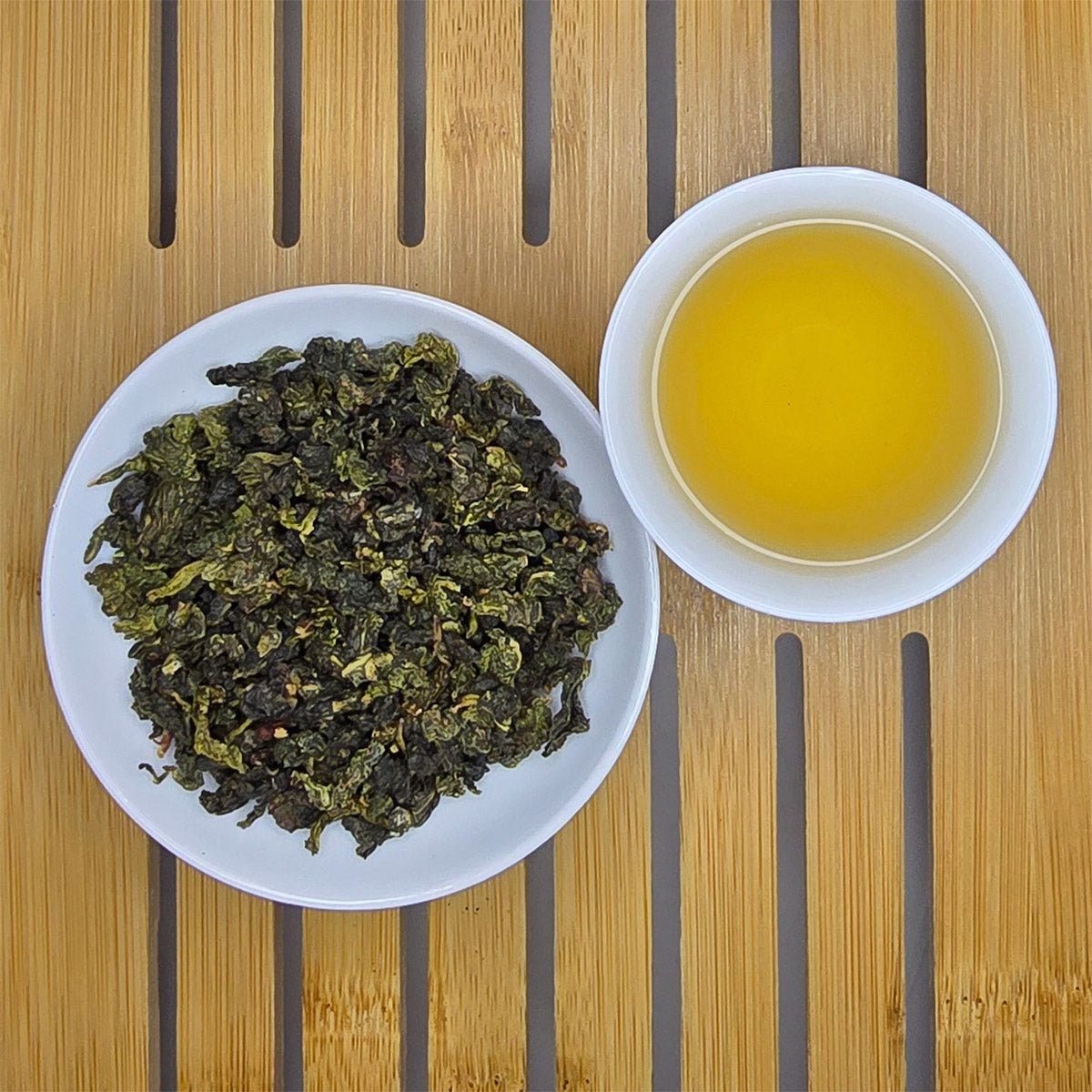
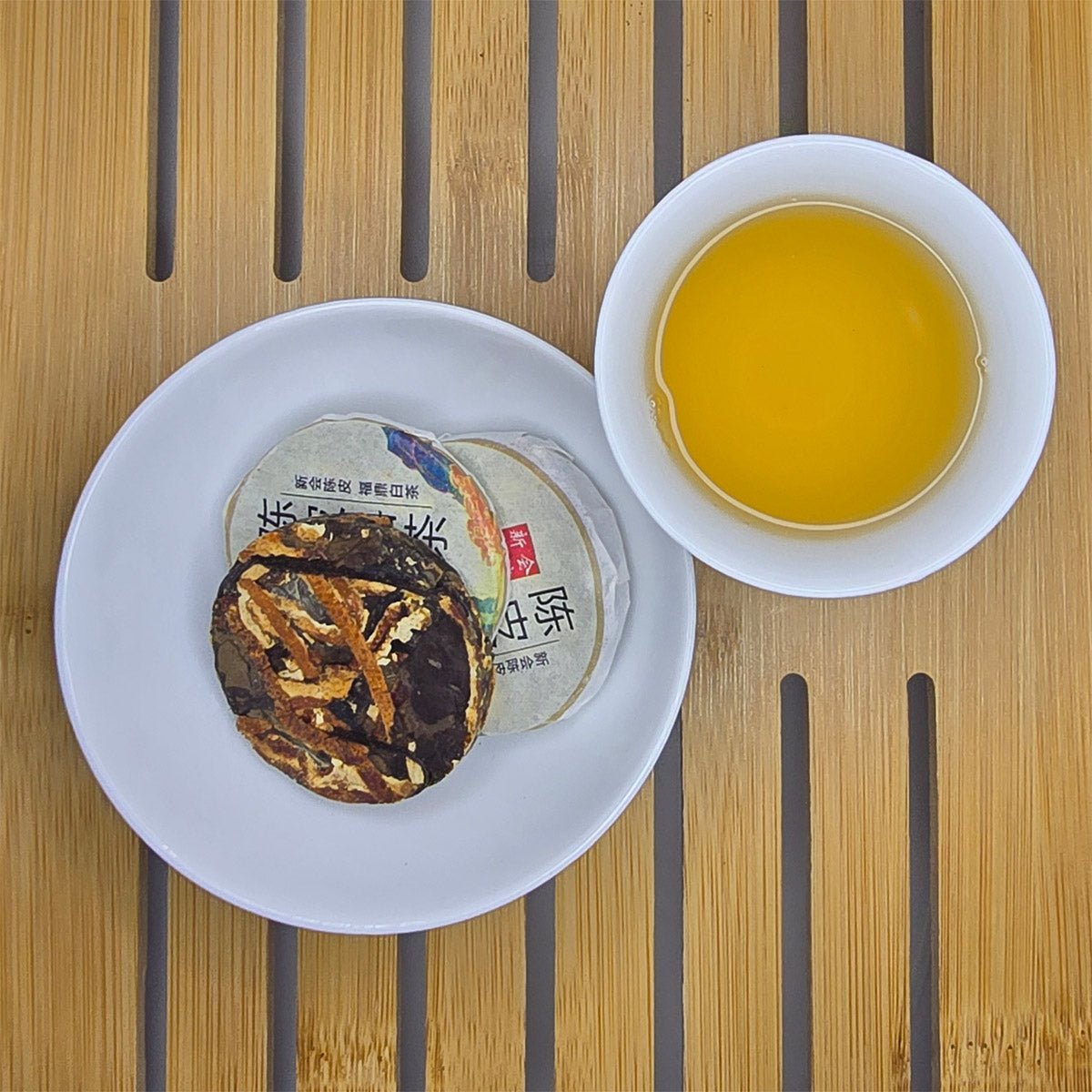
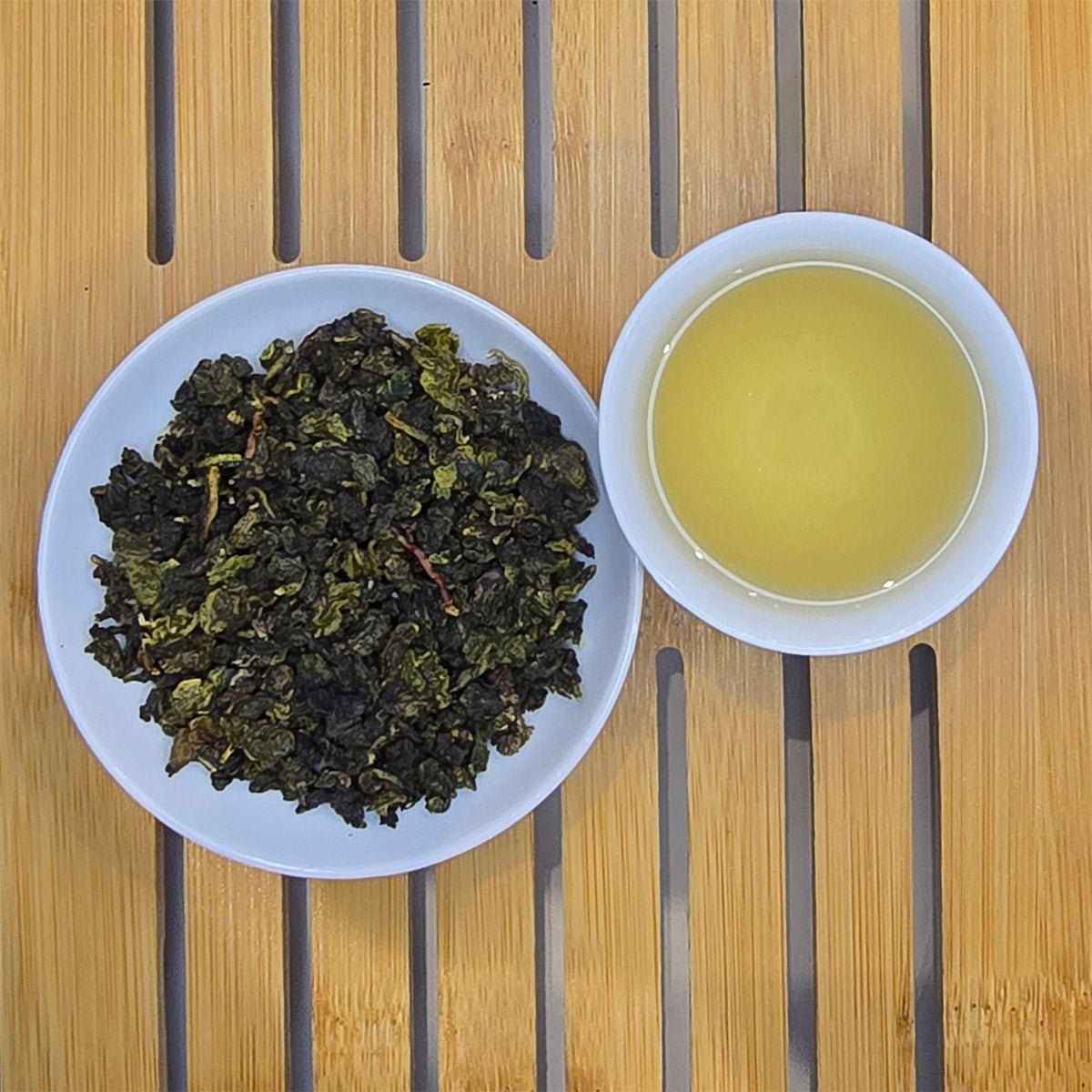
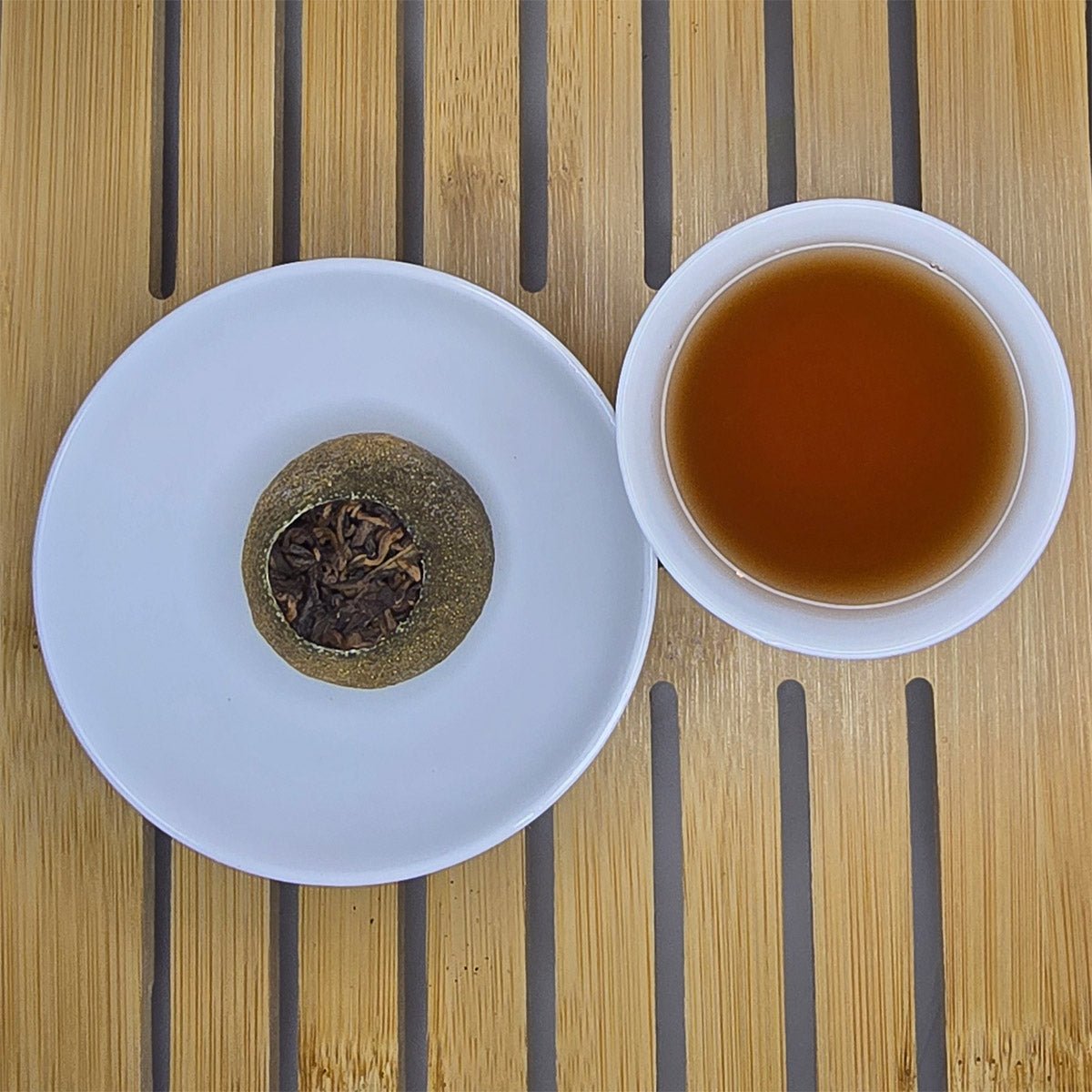
One beauty of compressed tea in modern times is often the beautiful artwork that adorns the packaging. Great examples of this can be found in our own selection of compressed teas.
The story of compressed tea is also a story of trade, changing tastes and the practical challenges of transporting a valuable agricultural product across enormous distances.
What Is Compressed Tea?
Compressed tea is made by pressing processed tea leaves into a compact shape, usually with the help of moisture, heat and pressure.
As we have described, the finished tea might resemble a flat disc, a rectangular brick, a small bowl or a tightly formed ball.
Unlike loose-leaf tea, which is stored as individual dried leaves, compressed tea holds its shape until a portion is broken or separated for brewing.
Different styles of compressed tea include:
| Type | Traditional Shape | Description |
|---|---|---|
| Tea brick | Rectangular block | Historically important for storage, transport and trade. |
| Tea cake (Bing Cha) | Flat, round disc | Commonly associated with puer tea. |
| Tuo Cha | Bowl or nest shape | A traditional compressed form, often made with puer. |
| Jin Cha | Mushroom shape | Associated with certain teas historically produced for Tibetan markets. |
| Mini Tuo Cha | Small bowl-shaped portion | A convenient modern format for individual servings. |
Although these shapes may look unusual to someone accustomed to tea bags, they developed for practical reasons.
Pressed tea occupies less space than an equivalent quantity of loosely packed leaves, making it easier to bundle, store and transport.
The process can also influence how certain teas develop during storage, although not every compressed tea is intended for long-term ageing.
The Early Origins of Compressed Tea in China
The history of compressed tea begins in China, where tea cultivation and consumption developed over many centuries.
Tea was known long before it became the everyday beverage we recognise today. Early methods of preparation often involved boiling tea with water and sometimes other ingredients, producing something closer to a herbal broth than a modern cup of tea.
Historical accounts suggest that tea producers in the Sichuan region were forming harvested leaves into compressed cakes by approximately the fourth century AD.
These early cakes were a practical way of processing and preserving tea, particularly as production and trade expanded.
Rather than being placed in an infuser, compressed tea could be broken into pieces using a Puer Needle and boiled to prepare a drink.
This was the beginning of a tradition that would become increasingly sophisticated during China's great imperial dynasties.
Historical reference: The Tea Industry – Woodhead Publishing .
Compressed Tea During the Tang Dynasty (618–907)
The Tang dynasty was one of the most significant periods in the development of Chinese tea culture.
Tea drinking became increasingly widespread, moving beyond its earlier regional traditions and gaining popularity among scholars, monks, merchants and members of the imperial court.
During this period, compressed tea cakes were an established method of preparing and distributing tea.
The production process was quite different from many modern methods.
Freshly harvested leaves were typically steamed, softened and pounded before being pressed into moulds. The resulting cakes were then dried and prepared for storage.
To make a drink, a portion of the cake could be roasted, ground and boiled in water.
This meant that making tea involved several stages, rather than simply pouring hot water over leaves.
Lu Yu and The Classic of Tea
One of the most important figures in the history of tea was Lu Yu, who lived during the eighth century.
His influential work, The Classic of Tea (Cha Jing), completed around AD 780, is widely regarded as the earliest comprehensive book devoted to tea.
It described tea cultivation, harvesting, processing, equipment and preparation.
Lu Yu also documented the preparation of compressed tea, including roasting and grinding the cakes before brewing.
His writing helped establish tea as something to be appreciated for its own qualities, rather than simply consumed as a medicinal or everyday drink.
A surviving Tang dynasty ceramic tea grater, held by the Timothy S. Y. Lam Museum of Anthropology, offers a fascinating physical connection to this period. Its textured surface was designed for grinding compressed tea.
Historical reference: Tang Dynasty Tea Grater – Timothy S. Y. Lam Museum of Anthropology .
The Song Dynasty: When Tea Cakes Became an Art Form
During the Song dynasty (960–1279), compressed tea became closely associated with refinement, craftsmanship and imperial prestige.
Tea production developed into a highly specialised activity, particularly in regions supplying the imperial court.
Some of the most celebrated teas were pressed into carefully formed cakes decorated with intricate designs.
Among these were the famous Dragon and Phoenix tea cakes.
Dragon and Phoenix Tea Cakes
These prestigious compressed teas were produced using elaborate moulds bearing dragon and phoenix motifs, symbols closely associated with imperial authority.
The production process required considerable skill.
Selected tea leaves were steamed, processed and pressed into decorative moulds before being carefully dried.
The finished cakes were valued not only for their flavour but also for their appearance, rarity and association with the imperial court.
They became prestigious tribute goods rather than ordinary everyday tea.
During the Song period, powdered tea preparation also developed into a sophisticated practice.
Finely ground tea could be whisked with hot water to create a frothy drink, an approach that has historical connections with later Japanese powdered tea traditions.
Compressed tea therefore occupied an interesting position: it could be both a practical commodity and a highly refined product.
Historical reference: Tea and Place: The Evolving Discussion about Terroir in Song China – Cambridge University Press.
The Tea Horse Road: How Compressed Tea Travelled Across Asia
One of the most fascinating chapters in the history of compressed tea concerns the ancient trading routes connecting China with Tibet and other regions of Asia.
These routes are often collectively known as the Tea Horse Road.
They were not a single continuous road but a network of difficult mountain paths, trading centres and regional routes.
Tea travelled from producing areas in southwestern China towards Tibet, while horses and other valuable goods moved in the opposite direction.
Why Was Tea Compressed for Transport?
Imagine transporting large quantities of loose tea across steep mountain passes using pack animals and human porters.
Loose leaves take up considerable space and can be difficult to protect during long journeys.
Compressing tea into bricks or other solid shapes made it easier to pack into manageable loads.
The compact blocks could be stacked, bundled and transported more efficiently.
For merchants travelling considerable distances, this was a valuable advantage.
Tea bricks also made it possible to divide larger quantities into smaller portions for trading or consumption.
Tea in Tibetan Culture
Tea became deeply embedded in Tibetan food and drinking traditions.
In Tibet, tea has traditionally been prepared in ways quite different from the lighter infusions familiar to many British tea drinkers.
One well-known preparation is butter tea, in which brewed tea is combined with butter and salt.
Historically, compressed tea made from relatively mature leaves and other plant material was particularly important for these markets.
The trade helped establish lasting connections between tea-producing regions of China and communities across the Tibetan Plateau.
Trading Tea for Horses
During the Song dynasty, tea was an important commodity in exchanges involving horses from Tibetan and other frontier regions.
Horses were strategically valuable for transport and military purposes, while tea was increasingly sought after in regions where it could not easily be cultivated.
The exchange became sufficiently important to attract government involvement and regulation.
Trade continued through later dynasties, although its organisation and economic significance changed over time.
The Tea Horse Road illustrates how compressed tea became much more than a beverage. It was a commodity that connected different communities, economies and cultures.
Historical reference: The Forgotten Road – National Geographic .
The Ming Dynasty: The Rise of Loose-Leaf Tea
For centuries, compressed tea had been central to Chinese tea culture. However, an important change took place during the Ming dynasty (1368–1644).
In 1391, the Hongwu Emperor ordered that compressed tea cakes should no longer be required as imperial tribute. Loose-leaf tea was to take their place.
This was a significant change because producing elaborate tribute cakes could be extremely labour-intensive.
As loose-leaf tea became more prominent, the way people prepared and enjoyed tea also changed.
Rather than grinding compressed cakes into powder, drinkers increasingly steeped whole leaves directly in hot water.
This encouraged the development of different teapots, cups and brewing equipment, many of which would look familiar today.
The transition was gradual. Compressed tea did not disappear, and different methods of preparing tea continued to exist alongside one another.
Nevertheless, the Ming period helped establish the loose-leaf brewing traditions that eventually became familiar throughout much of the world.
Historical reference: Chinese Tea – China Online Museum
Tea Bricks as Currency
Compressed tea was valuable not only because people enjoyed drinking it.
In some parts of Asia, tea bricks also served as a form of exchange.
Their relatively standardised shapes, portability and practical value made them useful trading commodities, particularly in regions where tea was in demand.
Tea bricks could be exchanged for goods and, in certain circumstances, used in a manner resembling currency.
This practice continued much later than many people might expect.
The Horniman Museum in London holds an early twentieth-century compressed tea brick believed to have been produced for the Russian or Siberian market.
The museum records that tea bricks of this kind were traded and used as currency across parts of China, Tibet, Mongolia, Russia and Central Asia.
The Science Museum Group also holds a Chinese compressed tea slab dating from before 1930, decorated with scenes depicting the manufacture of tea bricks.
These surviving objects provide a tangible reminder of how important compressed tea once was to international trade.
Rather than being merely an unusual way of packaging tea, the bricks were part of the economic life of communities spread across an enormous geographical area.
Historical references: Horniman Museum – Compressed Tea Brick and Science Museum Group – Slab of Compressed Tea

Puer Tea and the Survival of the Compressed Tea Tradition
Although loose-leaf tea became increasingly common in China, the tradition of compressed tea continued.
One of its best-known surviving forms is puer tea, traditionally associated with Yunnan province in southwestern China.
Puer is particularly interesting because its character can change during storage.
While many teas are valued for their freshness, certain puer teas are produced and stored with the expectation that their flavour may develop over time.
Compression became closely associated with this tradition, although puer is also available as loose leaves.
Raw Puer (Sheng)
Raw puer, known as sheng, is made from tea leaves that have undergone processing that typically includes heating, rolling and sun-drying.
The prepared leaves may then be steamed and pressed into cakes, bricks or other shapes.
Young raw puer can have a lively, sometimes bitter or astringent character.
With suitable storage, the tea may gradually develop different aromas, flavours and textures.
However, ageing is not a guarantee of improvement. The original leaf quality, processing and storage conditions all influence the result.
Ripe Puer (Shou)
Ripe puer, or shou, is a much more recent development.
The modern wet-piling method became established commercially during the 1970s. It uses controlled moisture, heat and microbial activity to transform the tea more quickly than natural ageing.
The resulting tea often has a darker infusion and a smoother, earthier flavour profile.
Ripe puer can be sold loose or compressed into cakes and bricks.
It's important not to confuse this modern processing technique with the much older history of compressed tea. Pressing leaves into cakes has been practised for centuries, whereas modern ripe puer production is comparatively recent.
Research reference: Puer Tea Tasting in Yunnan, China – Journal of Ethnopharmacology .
How is Compressed Tea Made Today?
Modern compressed tea production varies depending on the type of tea, its origin and the producer's preferred methods.
For traditional compressed puer, the process generally begins with prepared, dried tea leaves.
These leaves are often referred to as mao cha, meaning roughly processed tea.
The leaves are weighed, softened with steam and placed into a cloth bag or mould.
Pressure is then applied to create the desired shape.
Some producers use traditional stone presses, while others use mechanical equipment.
After pressing, the tea must be dried carefully to remove excess moisture before being wrapped and stored.
The finished cakes may be wrapped in paper, while other compressed forms can be packed in different materials.
The precise method depends on the tea being produced.
Does Compressing Tea Change Its Flavour?
Compression can influence how tea develops during storage, particularly with teas such as puer.
The density of the compressed leaves affects their exposure to air and moisture, which can influence the pace and character of changes over time.
However, pressing tea into a cake does not automatically improve its quality.
The leaves themselves remain the most important starting point.
A well-made loose-leaf tea can be considerably better than a poorly produced compressed tea, regardless of how attractive the finished cake looks.
Why Is Compressed Tea Still Popular?
The practical advantages that made compressed tea valuable centuries ago haven't entirely disappeared.
A tea cake can be a convenient way to store a substantial quantity of tea without keeping a large container of loose leaves.
For some enthusiasts, compressed tea also offers an opportunity to explore how particular teas develop over time.
But there's another reason for its continuing appeal: the experience of preparing it.
Breaking a small portion from a tea cake, examining the leaves and brewing them carefully creates a different experience from opening a packet of tea bags.
There's also considerable variety within compressed tea.
Some teas are intended to be enjoyed relatively young, while others are traditionally stored for longer periods.
Different processing methods, growing regions and storage conditions produce noticeably different results.
For anyone interested in the history and culture of tea, compressed tea provides a direct connection to practices that have developed over many centuries.
The wider importance of China's tea traditions was recognised in 2022, when UNESCO added the country's traditional tea processing techniques and associated social practices to its Representative List of the Intangible Cultural Heritage of Humanity.
This recognition covers a broad range of tea traditions, rather than compressed tea alone.
Reference: UNESCO – Traditional Tea Processing Techniques and Associated Social Practices in China .
How Do You Brew Compressed Tea?
If you've never prepared compressed tea before, the process is relatively straightforward.
The main difference from loose-leaf tea is that you first need to separate a small portion from the cake or brick.
Step 1: Remove a Small Portion
For a compressed tea cake, a suitable tea pick or tea knife can help separate the leaves.
Insert the tool carefully into a natural gap or layered edge of the cake and gently work the leaves apart.
Avoid forcing the tool directly towards your hand.
The aim is to loosen the tea rather than crush it into small fragments.
Step 2: Measure the Tea
For a simple Western-style infusion, approximately 2–3 grams of tea per 200–250 ml of water is a reasonable starting point.
Some traditional brewing methods use considerably more tea with smaller quantities of water and shorter infusions.
Step 3: Add Hot Water
The appropriate temperature depends on the tea.
Ripe puer is commonly brewed with water close to boiling.
Raw puer can also be brewed with hot water, although some drinkers prefer slightly cooler temperatures for younger teas to manage bitterness.
Follow the producer's instructions where available.
Step 4: Allow the Tea to Infuse
Give the leaves time to open and release their flavour.
Some compressed teas take slightly longer to loosen during the first infusion.
Many puer teas can be brewed several times, with their character changing from one infusion to the next.
Experimenting with brewing time and leaf quantity is part of discovering how you prefer to enjoy them.
Compressed Tea vs Loose-Leaf Tea: What's the Difference?
Although compressed and loose-leaf teas look very different, the distinction is primarily one of physical form.
Both can be made from high-quality leaves, and both can produce excellent tea.
| Feature | Compressed Tea | Loose-Leaf Tea |
|---|---|---|
| Appearance | Pressed into cakes, bricks or other shapes | Individual dried leaves |
| Preparation | A portion must usually be separated before brewing | Leaves can be measured directly |
| Storage | Compact and convenient for larger quantities | Usually stored in an airtight container |
| Brewing | Some cakes take time to loosen | Leaves generally separate more readily |
| Ageing | Certain styles, particularly puer, are traditionally aged | Some loose teas can also be aged |
| Tea varieties |
Particularly associated with puer and other traditional teas |
Available across a very wide range of tea styles |
The choice isn't necessarily about which is better.
Loose-leaf tea is convenient for everyday brewing and offers an enormous range of flavours.
Compressed tea adds another dimension, particularly for people interested in traditional Chinese tea production and the way certain teas change during storage.
Exploring Compressed Tea for the First Time
If you're curious about compressed tea, puer is a natural place to begin.
Ripe puer is often approachable for people who enjoy smooth, dark and earthy teas.
Raw puer offers a different experience, with flavours that vary considerably depending on the age of the tea, its origin and how it has been stored.
Small compressed portions or sample quantities can be useful for beginners who want to explore different styles without buying an entire cake.
There's no need to start with an expensive or particularly old tea. A well-produced, properly stored tea from a reputable supplier is a more sensible introduction.
Explore our tea collection: Discover our compressed teas collection
You can also discover more about traditional brewing methods in our Loose Leaf Tea vs Tea Bags guide.
Frequently Asked Questions About Compressed Tea
When was compressed tea first invented?
The exact date is uncertain. Historical accounts suggest that tea producers in China were forming compressed tea cakes by approximately the fourth century AD. The practice was well established by the Tang dynasty (618–907).
Why did the Chinese compress tea into bricks?
Compressing tea made it easier to store, pack and transport. This was particularly valuable for merchants carrying tea over long distances. Compressed tea also became important in regional trade and, in some places, was used as a form of currency.
Is compressed tea the same as puer tea?
No. Puer is one of the best-known types of compressed tea, but not all compressed tea is puer. Other traditional teas can also be pressed into cakes and bricks. Puer itself is available in both loose and compressed forms.
Does compressed tea improve with age?
Some compressed teas, particularly certain raw puer teas, can develop desirable characteristics during storage. However, not all compressed teas are intended for ageing, and poor storage can damage tea rather than improve it.
Can you drink compressed tea every day?
Yes. Compressed tea can be prepared and enjoyed much like other tea, provided it has been produced and stored safely. Its caffeine content varies depending on the leaves, processing and brewing method.
Why are some tea cakes so expensive?
Prices can reflect the quality and origin of the leaves, production methods, age, storage history, rarity and market demand. An expensive tea cake isn't automatically better, and beginners don't need to spend a great deal to explore compressed tea.
A Tradition That Continues Today
It's remarkable to think that a small cake of tea can connect the modern tea drinker with centuries of history.
Compressed tea has been prepared for imperial courts, carried across remote mountain passes, exchanged for horses and traded as a valuable commodity.
Its appearance and methods of production have changed, but the underlying tradition has survived.
Today, a compressed tea cake offers something rather different from the convenience of a tea bag or a packet of loose leaves.
For some, the attraction is the flavour. For others, it's the possibility of exploring how tea develops with age.
And for anyone interested in the wider story of tea, compressed cakes and bricks are a reminder that even something as familiar as a cup of tea has a surprisingly rich past.
Gao Ma Ming Zhu Jin Hua Hei Cha
Smooth & Naturally Sweet
A rare 2019 Anhua dark tea from Hunan Province, traditionally compressed into convenient 8g cakes. Featuring distinctive golden flowers, this beautifully mellow tea offers gentle bamboo notes, delicate sweetness and a refreshing finish.
Explore Tea →2003 Aged Shu Puer Mini Tea Brick
Rich & Earthy
An aged ripe Puer tea from Yunnan, compressed into convenient 5g bricks. Deep, smooth and wonderfully mellow, with notes of dark wood, cocoa, gentle earthiness and a lingering natural sweetness.
Explore Tea →Zhangping Shui Xian Oolong Tea
Floral & Smooth
A distinctive Chinese oolong tea from Zhangping in Fujian Province. Traditionally pressed into small square tea cakes, offering a beautifully fragrant infusion with delicate floral notes, gentle sweetness and a smooth, lingering finish.
Explore Tea →
References and Further Reading
The following sources provide further information about the history, production and cultural importance of compressed tea.
- The Tea Industry – Woodhead Publishing
- Tang Dynasty Tea Grater – Timothy S. Y. Lam Museum of Anthropology
- Tea and Place in Song China – Cambridge University Press
- The Forgotten Road – National Geographic
- Chinese Tea – China Online Museum
- Compressed Tea Brick – Horniman Museum
- Slab of Compressed Tea – Science Museum Group
- Puer Tea Tasting in Yunnan, China – Journal of Ethnopharmacology
- Traditional Tea Processing Techniques in China – UNESCO


