








Rare 1998 Wild Arbor Ripe Puer Tea
Available in stock (200)
Rare 1998 Wild Arbour Ripe Puer Tea – Vintage Menghai Shu Puer
Deep aged wood, forest-floor richness, subtle dried fruit and a beautifully smooth, full-bodied finish. Our Rare 1998 Wild Arbour Ripe Puer Tea is a distinguished vintage Chinese dark tea from Menghai, Yunnan Province, with a mature character shaped by its ripe-Puer processing and long storage history.
Dating to 1998, this exceptional Shu Puer is made from large-leaf tea material described as wild or wild-arbour-grown. The tea is associated with production at a state-owned Chinese tea factory and subsequent dry storage in Kunming, Yunnan.
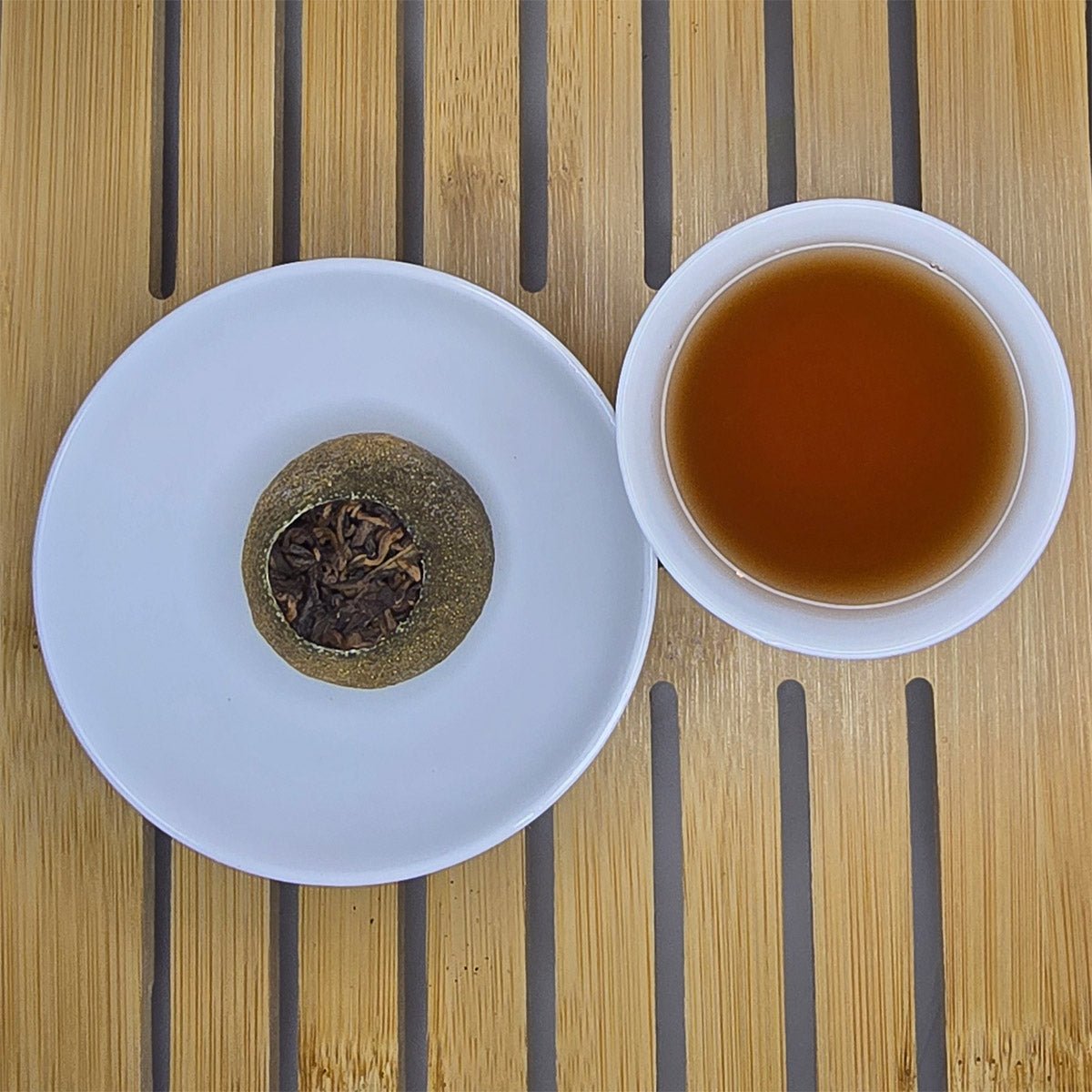
The resulting infusion is dark amber to deep brown, with an inviting aroma of aged wood, earth, forest floor and subtle dried-fruit sweetness.
On the palate, it offers a rich, mellow flavour with gentle mineral impressions and a rounded, warming finish. Its substantial body is balanced by a silky smoothness that makes the tea rewarding to drink slowly.
Unlike younger ripe Puer teas that may display a more direct fermented character, this 1998 selection is distinguished by its mature woody depth and layered aged-tea aroma.
It is particularly suited to Gongfu brewing, where a series of short infusions allows the flavour to develop gradually. It can also be prepared in a conventional teapot for a deep, satisfying cup.
For enthusiasts of vintage Chinese tea, Menghai ripe Puer and carefully stored dark tea, this is an opportunity to explore the mature character of a distinctive 1998 selection.
Tea Name: Rare 1998 Wild Arbor Ripe Puer Tea
Tea Category: Ripe Puer (Shu / Shou Puer)
Vintage: 1998
Origin: Menghai, Yunnan Province, China
Leaf Material: Large-Leaf Wild or Wild-Arbor Tea
Production History: State-Owned Tea Factory
Storage History: Described as Dry-Stored in Kunming, Yunnan
Tea Type: Post-Fermented Chinese Puer Tea
Aroma: Aged Wood, Forest Floor, Mature Cellar and Dried Fruit
Flavour: Mellow Earth, Wood, Subtle Sweetness and Mineral Notes
Liquor: Dark Amber to Deep Brown
Mouthfeel: Full-Bodied, Smooth and Rounded
Water Temperature: 95–100°C
Pack Sizes: 50g, 125g and 250g
Caffeine: Naturally Contains Caffeine
What Makes Our 1998 Wild Arbour Ripe Puer Special?
This tea brings together a dated vintage, Menghai leaf origin, wild-arbour sourcing identity and an extended storage history.
1998 vintage: A distinctive aged selection from the late 1990s.
Menghai origin: Large-leaf tea material associated with one of Yunnan's best-known Puer-producing regions.
Wild-arbour identity: Described as originating from wild or naturally established tea trees rather than conventional young plantation bushes.
Factory production history: Associated with production at a state-owned Chinese tea factory.
Kunming dry storage: A storage history described as taking place in Yunnan's capital.
Deep mature aroma: Aged wood, forest floor and cellar-like complexity.
Subtle natural sweetness: Dried-fruit and date-like impressions soften the earthy depth.
Rich, smooth body: A full-flavoured infusion with a rounded, lingering finish.
The tea is ready to enjoy now, offering a mature drinking character without requiring further ageing.
What Is Wild Arbour Ripe Puer Tea?
Wild Arbour Puer is a term used for tea associated with naturally established or less intensively cultivated tea trees.
In the world of Yunnan tea, descriptions such as wild, arbour, old tree and ancient tree can refer to different growing environments and sourcing traditions.
They should not automatically be treated as interchangeable terms.
Our 1998 Wild Arbour Ripe Puer is described as being made from large-leaf material associated with wild or wild-arbour trees in Menghai.
The exact age of the individual trees and the precise tea gardens are not specified.
Wild-arbour is not itself an organic certification or a guarantee that every tree has never been cultivated.
For this tea, the most important qualities are its distinctive vintage identity, mature aroma and smooth, deeply layered flavour.
The finished tea offers a rich expression of ripe Puer, with aged wood, mellow earth, subtle dried fruit and a lingering finish.
From Menghai, Yunnan Province
Menghai is located in Xishuangbanna, in southern Yunnan Province, China.
The area is closely associated with Yunnan large-leaf tea and the production of Puer.
Its tea-growing landscape includes established gardens, mountainous growing areas and long-standing traditions of processing both raw and ripe Puer.
Our 1998 Wild Arbour Ripe Puer is described as being made from large-leaf tea material harvested in Menghai.
The tea's later storage history is associated with Kunming, another city in Yunnan Province.
These two locations play different roles in its story: Menghai is the stated leaf origin, while Kunming is the stated storage location.
The exact village, tea garden and individual source trees are not identified.
The tea's mature character can be appreciated through its deep dark-amber liquor, aged woody aroma and smooth, full-bodied mouthfeel.
What Does the 1998 Vintage Mean?
The year 1998 identifies the stated vintage of this ripe Puer tea.
Vintage information is particularly important to tea enthusiasts exploring mature Chinese dark teas, because it provides a reference point for the tea's production history.
However, a vintage year should not automatically be interpreted as the exact date of every production stage.
Harvesting, ripe-Puer fermentation, pressing and packing may occur at different times.
Our 1998 Wild Arbour selection is described as having been produced in 1998 and subsequently stored in Kunming.
Its original factory records, precise fermentation date and complete storage documentation are not published with the product.
The fixed vintage is more useful than describing the tea as exactly a certain number of years old, because an age statement becomes outdated over time.
What makes this selection attractive today is its developed aroma and rich, smooth drinking character.
What Is Kunming Dry-Stored Puer?
Dry storage is a term used in Puer tea to describe storage in comparatively dry conditions rather than deliberately humid ageing environments.
Kunming, the capital of Yunnan Province, is often associated with relatively dry Puer storage.
Storage conditions matter because temperature, humidity, airflow and surrounding aromas can influence how a tea changes over time.
Our 1998 Wild Arbour Ripe Puer is described as having been dry-stored in Kunming following production.
This storage history is part of the tea's distinctive identity.
The precise humidity, temperature, storage location and continuity of the storage record are not separately documented.
Dry storage does not mean that a tea has been kept completely without moisture, nor does it automatically guarantee superior flavour.
Its value lies in the particular mature character of the finished tea: woody depth, mellow earth, subtle sweetness and a rounded, lingering finish.
How Is Ripe Shu Puer Made?
Ripe Puer, also called Shu Puer or Shou Puer, is a type of post-fermented Chinese dark tea associated with Yunnan Province.
Its production differs from ordinary Chinese black tea and from raw Sheng Puer.
Ripe Puer undergoes controlled microbial fermentation, traditionally known as wo dui, or wet piling.
During this process, heat, moisture and microbial activity transform the tea material and contribute to its darker colour and mellow flavour.
The finished tea can be sold loose or compressed into cakes, bricks and other forms.
After production, storage may continue to influence the tea's aroma and texture.
Our 1998 Wild Arbour Ripe Puer is a mature example of the Shu style, offering deep earthy-woody flavour and a smooth mouthfeel.
It is not a raw Sheng Puer and does not have the same processing or flavour profile as young green-style Puer.
Tasting Notes – Aged Wood, Forest Floor and Dried Fruit
| Characteristic | Description |
|---|---|
| Aroma | Aged wood, forest floor and mature cellar-like notes |
| Flavour | Deep, mellow earth and woody warmth |
| Sweetness | Subtle dried fruit and date-like impressions |
| Mineral Notes | Gentle mineral undertones |
| Liquor Colour | Dark amber to deep brown |
| Body | Full and substantial |
| Mouthfeel | Smooth and rounded |
| Finish | Long, warming and mellow |
The dry leaves reveal a mature aroma reminiscent of aged wood and forest floor.
When brewed, the liquor develops a deep amber to brown colour with a rich, inviting fragrance.
The first sip offers a full-bodied, mellow character built around earthy and woody notes.
Subtle dried-fruit sweetness provides contrast, while gentle mineral impressions add another layer.
The mouthfeel is smooth and rounded, making the tea satisfying without needing added sugar.
Its finish is long and warming, with aged-wood impressions lingering after the sip.
Brewing strength will influence the balance of these flavours. Shorter infusions can reveal a softer profile, while longer steeps create a more concentrated cup.
Earth, wood, dried fruit and leather-like notes are natural flavour descriptions, not ingredients added to the tea.
How to Brew 1998 Wild Arbour Ripe Puer
This tea can be enjoyed through repeated Gongfu infusions or brewed in a conventional teapot.
The original brewing guidance recommends 5–7g per 200–250ml of water at 95–100°C, with a brief optional rinse.
Short-Infusion Brewing
- Warm a 200–250ml teapot or suitable brewing vessel.
- Add approximately 5–7g of tea.
- Heat fresh water to 95–100°C.
- If desired, rinse the leaves briefly for 5–10 seconds and discard the water.
- Steep the first drinking infusion for approximately 20–30 seconds.
- Pour off completely and enjoy.
- Continue with fresh hot water, increasing the brewing time to approximately 30–60 seconds or adjusting to taste.
For a more concentrated Gongfu session using a smaller gaiwan, reduce the water volume and adjust the amount of leaf and steeping time to your preferred strength.
Western-Style Teapot Brewing
The following is a practical starting point for a larger cup.
- Add approximately 3–4g of tea to a 250ml teapot or infuser.
- Heat fresh water to 95–100°C.
- Steep for approximately 3–4 minutes.
- Strain the leaves completely.
- Reinfuse with fresh hot water if the flavour remains enjoyable.
| Method | Tea and Water | Time |
|---|---|---|
| Optional Rinse | 5–7g / 200–250ml / 95–100°C | 5–10 seconds |
| Short Infusion – First Brew | 5–7g / 200–250ml / 95–100°C | 20–30 seconds |
| Short Infusion – Later Brews | Same leaves, fresh hot water | 30–60 seconds or to taste |
| Western Teapot | 3–4g / 250ml / 95–100°C | 3–4 minutes |
Brewing tip: Taste the first few infusions plain to appreciate the aged-wood aroma, mellow earth and subtle dried-fruit sweetness.
1998 Wild Arbour vs Other Aged Ripe Puer Teas
Great Tea offers several ripe Puer selections that highlight different vintages, leaf styles and flavour profiles.
| Tea | Main Distinction | Flavour Character |
|---|---|---|
| 1998 Wild Arbour Ripe Puer | 1998 vintage, Menghai leaf origin and Kunming dry-storage history | Aged wood, forest floor, earth, dried fruit and mineral depth |
| 2010 Gushu Daye Shu Puer | April 2010 large-leaf Gushu designation | Thick, mellow earth, mature wood and silky body |
| 2010 Zhang Xiang Gushu Shucha | 2010 vintage with a camphor-aroma designation | Specialist aromatic-wood character |
| 2015 Premium Palace Shu Puer | Fine Gong Ting grade in a segmented bar | Cocoa, malt, earth and soft sweetness |
| Wild Zirantuo Ripe Puer | Naturally formed fermentation clusters | Deep earth, mature wood and lingering sweetness |
Choose the 1998 Wild Arbour selection if you are looking for a mature ripe Puer with a distinctive vintage identity and deep, layered woody-earthy flavour.
For a 2010 large-leaf ripe Puer, discover our 2010 Gushu Daye Shu Puer.
For a different aromatic style, explore our 2010 Zhang Xiang Gushu Shucha.
For a convenient segmented bar, try our 2015 Premium Palace Shu Puer.
How Does Aged Ripe Puer Differ from Raw Sheng Puer?
Ripe Shu and raw Sheng are two distinct styles of Yunnan Puer tea.
Ripe Shu Puer undergoes controlled microbial wet-pile fermentation, producing a darker liquor and a mellow, earthy character.
Raw Sheng Puer follows a different production process and may display brighter herbal, floral, fruity or astringent qualities, particularly when young.
Both styles can change during storage, but their processing histories and flavour profiles are not interchangeable.
Our 1998 Wild Arbour is a ripe Shu Puer, offering mature woody depth and a dark, smooth infusion.
For a contrasting aged raw Puer, discover our Rare 1996 Yiwu Old Tree Sheng Puer.
Is Vintage Ripe Puer Better Than Young Ripe Puer?
Vintage and young ripe Puer can offer different drinking experiences.
Freshly produced ripe Puer may have a more direct fermented aroma, while older teas can develop more integrated woody, earthy and sweet notes during suitable storage.
However, age alone does not guarantee better flavour.
The quality of the original tea material, fermentation process and storage conditions all matter.
Our 1998 Wild Arbour Ripe Puer is selected for its current mature character, with aged wood, mellow earth, subtle dried fruit and a smooth, rounded mouthfeel.
It is ready to drink now.
Further storage may change the flavour, but additional ageing does not guarantee improvement or increased monetary value.
Why Choose Our Rare 1998 Wild Arbour Ripe Puer?
- 1998 vintage: A mature late-1990s Yunnan ripe Puer selection.
- Menghai origin: Large-leaf tea material associated with a renowned Puer-producing area.
- Wild-arbour designation: A distinctive sourcing identity.
- Aged woody aroma: Mature wood, forest floor and cellar-like notes.
- Natural sweetness: Gentle dried-fruit and date-like impressions.
- Deep-coloured liquor: Dark amber to rich brown.
- Full, smooth body: Rounded texture and lingering finish.
- Multiple infusions: Suitable for repeated short brewing sessions.
- Three pack sizes: Available in 50g, 125g and 250g.
Ingredients and Caffeine
Ripe Puer tea leaves (Camellia sinensis).
The earthy, woody, dried-fruit and leather-like impressions are natural tasting descriptions, not added ingredients.
As a tea made from Camellia sinensis, it naturally contains caffeine.
How to Store Vintage Ripe Puer
Store your 1998 Wild Arbour Ripe Puer in a clean, dry, odour-free environment away from direct sunlight and excessive moisture.
Protect it from coffee, spices, perfumes and other strong aromas that could affect its fragrance.
Avoid condensation, damp storage areas and sudden changes in temperature.
Use suitable protective packaging that keeps the tea clean while preserving its current aroma.
Vintage Puer can continue to change during storage, but further ageing does not guarantee better flavour.
This tea is ready to enjoy now for its developed woody-earthy character and smooth, full-bodied finish.
Frequently Asked Questions
What is 1998 Wild Arbour Ripe Puer?
It is a vintage Shu Puer tea from Menghai, Yunnan Province, described as being made from wild-arbour large-leaf tea material and dry-stored in Kunming.
Is this tea really from 1998?
1998 is the stated vintage of this selection. The original factory and batch documentation are not published with the product.
How old is a 1998 Puer tea?
A 1998 vintage is approximately 28 calendar years old in 2026. The precise age depends on the actual production date.
What does wild arbour mean?
Wild arbour is a sourcing description associated with naturally established or less intensively cultivated tea trees. It does not by itself establish exact tree ages or organic certification.
What is Kunming dry storage?
It refers to storing Puer in comparatively dry conditions associated with Kunming, Yunnan. Temperature, humidity and storage practices can influence the tea's development over time.
Is this a raw or ripe Puer?
It is a ripe Shu Puer, made using controlled microbial post-fermentation, not a raw Sheng Puer.
Does this tea taste earthy?
Yes. Its flavour includes mellow earth, aged wood, forest-floor impressions and subtle dried-fruit sweetness.
Does it contain caffeine?
Yes. Ripe Puer is made from tea leaves and naturally contains caffeine.
Can I brew the leaves more than once?
Yes. The tea is suitable for repeated infusions. Begin with short steeps and increase the time gradually.
Will it improve if I store it for longer?
Its flavour may change during further storage, but additional ageing does not guarantee improvement. It is ready to drink now.
Discover the Mature Depth of 1998 Wild Arbour Ripe Puer
Our Rare 1998 Wild Arbour Ripe Puer offers a distinctive expression of mature Yunnan Shu tea.
Its deep dark-amber liquor, aged-wood aroma, mellow earth, gentle dried-fruit sweetness and smooth, rounded finish make it a rewarding choice for lovers of vintage Chinese dark tea.
Enjoy it through repeated short infusions to explore its changing layers of aroma and flavour, or brew a larger pot for a rich, satisfying cup.
For another mature large-leaf ripe Puer, discover our 2010 Gushu Daye Shu Puer.
For a different old-tree ripe Puer style, explore our 2010 Zhang Xiang Gushu Shucha.
For a convenient pressed tea, try our 2015 Premium Palace Shu Puer.
Browse more aged Chinese dark teas in our Black and Puer Teas Collection.
Choose your 50g, 125g or 250g pack and experience the mature woody-earthy depth of Rare 1998 Wild Arbour Ripe Puer.

Discover the Origins of Your Tea
Yunnan Province, China
Journey to the ancient tea forests of Yunnan, widely regarded as the birthplace of tea. Discover mist-covered mountains, centuries-old tea trees and the remarkable traditions behind some of China's most distinctive teas, including Pu'er, Dian Hong black tea and Yunnan white tea. Explore the landscapes, history and craftsmanship that make this extraordinary region so special.
Explore Yunnan's Tea Heritage →Couldn't load pickup availability


Your payment information is processed securely. We do not store credit card details nor have access to your credit card information.
