








Rare, Handmade Fo Shou Oolong, Buddha’s Hand Oolong Tea
Available in stock (99)
Rare Fo Shou Oolong Tea – Handmade Buddha's Hand Oolong from Yongchun
A rare Chinese oolong distinguished by its extraordinary leaves and traditional craftsmanship. Our Fo Shou Oolong Tea, also known as Buddha's Hand Oolong, comes from Yongchun County in Fujian Province, China. Made from a distinctive large-leaf cultivar and gently finished with charcoal roasting, this tea offers a smooth, rounded infusion with delicate floral fragrance, creamy undertones and a refreshing hint of citrus.
Fo Shou is an unusual tea to encounter in the UK. While varieties such as Tie Guan Yin and Da Hong Pao are more widely recognised, Yongchun Fo Shou remains a specialist oolong, particularly appealing to tea drinkers who enjoy discovering lesser-known Chinese cultivars and traditional regional styles.
What makes this selection especially interesting is the combination of its large, substantial leaves, mountain-grown origin and carefully managed processing. The leaves are hand-worked using traditional techniques, then gently charcoal-roasted to develop depth without losing their natural fragrance.
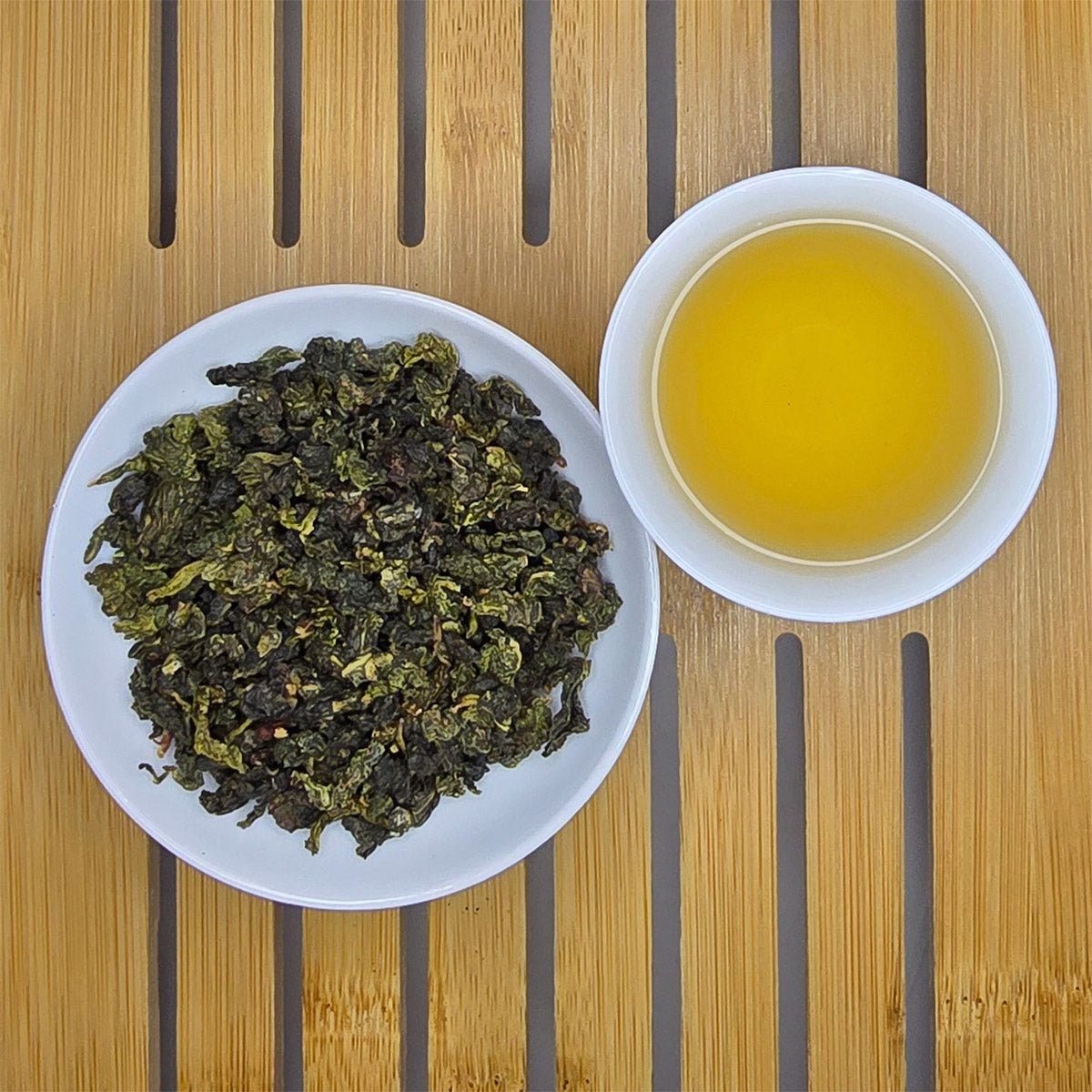
The result is a clear golden-yellow liquor with a silky texture, gentle sweetness and a clean, lingering finish. Brewed Gongfu style, the leaves gradually open to reveal a succession of soft floral, creamy and lightly fruity flavours.
Origin: Yongchun County, Quanzhou, Fujian Province, China
Tea Type: Rare Chinese Oolong Tea
Cultivar: Fo Shou (Buddha's Hand)
Growing Elevation: Up to 900 Metres, According to the Product Specification
Production: Traditionally Hand-Processed / Semi-Handcrafted
Processing: Partially Oxidised and Gently Charcoal-Roasted
Leaf Appearance: Large, Substantial, Twisted Leaves
Liquor Colour: Clear Golden-Yellow
Caffeine: Naturally Contains Caffeine
Available Sizes: 50g, 125g and 250g
What Makes Fo Shou Oolong So Rare?
Fo Shou is not a typical everyday oolong. It belongs to a distinctive large-leaf tea cultivar traditionally associated with Yongchun, a county in southern Fujian with its own long-established oolong-making heritage.
Although Chinese oolong is now enjoyed around the world, much of the international market concentrates on a relatively small number of familiar styles. Yongchun Fo Shou is less widely represented, making it an appealing discovery for enthusiasts who want to explore beyond the best-known varieties.
A distinctive cultivar: Fo Shou is particularly recognised for its large leaves, which look markedly different from the smaller, tightly rolled leaves of many modern oolongs.
Specialist regional origin: Yongchun has a tea-making tradition of its own, and Fo Shou is one of the cultivars closely associated with the area.
Traditional hand-processing: This selection is described as being carefully produced using artisanal techniques, with close attention paid to the development of aroma, texture and flavour.
Gentle charcoal roasting: Slow roasting gives the finished tea greater warmth and depth while preserving the cultivar's soft floral and fruity character.
These characteristics make Fo Shou a particularly interesting tea for collectors of unusual oolongs and for anyone who appreciates the relationship between cultivar, origin and traditional craftsmanship.
Why Is It Called Buddha's Hand Oolong?
The name Fo Shou (佛手) translates as "Buddha's Hand". It is associated with the unusual shape and generous size of the tea leaves, and the name also recalls the distinctive fingered Buddha's Hand citrus fruit.
The Fo Shou cultivar is known for producing notably large leaves. When dry, they appear thick, twisted and substantial. During brewing, they gradually unfold, revealing their size and structure.
The tea's flavour can also have a gentle citrus-like brightness, which makes the name particularly fitting. However, Buddha's Hand Oolong is not a fruit-flavoured blend: the floral and citrus-like tasting notes arise from the tea itself.
For tea enthusiasts, the leaves are part of the pleasure. Watching a handful of dark, twisted leaves open into broad, supple leaves is one of the most memorable aspects of preparing Fo Shou.
Origin – Yongchun, Fujian Province
Yongchun County lies within Quanzhou in southern Fujian Province, one of China's important traditional oolong-producing regions. While nearby Anxi is particularly famous for Tie Guan Yin, Yongchun is associated with its own distinctive tea varieties, including Fo Shou.
Our selection is described as being grown in the mountainous terrain of Yongchun at elevations reaching approximately 900 metres. The original product specification also identifies red clay soils, mountain spring water and a relatively undisturbed growing environment as characteristics of its source area.
The cultivar, growing conditions and production methods all contribute to the finished tea. Fo Shou's naturally expressive leaves provide the foundation, while partial oxidation and careful roasting help develop its smooth body and fragrant character.
Rather than presenting a strong, heavily roasted profile, this selection offers a gentler balance between floral aroma, soft creaminess, light fruit notes and warming depth.
Traditional Hand-Processing and Gentle Charcoal Roasting
Producing oolong tea requires a series of carefully managed stages. Fresh leaves are withered to reduce moisture, gently worked to encourage controlled oxidation, heated to stop further oxidation, then shaped and dried.
Fo Shou's large leaves make the handling of the tea particularly interesting. The aim is to develop the cultivar's fragrance while retaining enough leaf structure to produce a smooth, balanced infusion.
For this Yongchun selection, the processing is described as traditional and semi-handcrafted, with gentle charcoal roasting used to refine the finished tea.
Charcoal roasting can bring warmth and depth to oolong, but it does not necessarily mean a strongly smoky or dark-roasted flavour. In this tea, the roast is intended to support the natural floral and creamy character rather than dominate it.
The finished leaves have a substantial, twisted appearance. Once immersed in hot water, they gradually soften and open, releasing their fragrance over successive infusions.
Tasting Notes
| Attribute | Description |
|---|---|
| Aroma | Soft floral fragrance with creamy and lightly fruity undertones |
| Flavour | Smooth, gently sweet and rounded, with orchid-like notes and subtle citrus brightness |
| Liquor Colour | Clear golden-yellow |
| Mouthfeel | Silky, mellow and substantial without heaviness |
| Roast Character | Gentle warmth that supports the floral flavour |
| Finish | Clean and lingering, with soft sweetness and delicate floral notes |
Fo Shou offers a particularly balanced tasting experience. The floral fragrance is noticeable without becoming overpowering, while the creamy texture gives the tea a rounded, satisfying character.
The citrus-like brightness adds freshness to the finish. It is a subtle tasting note rather than the sharp acidity of a fruit infusion, helping the tea remain light and elegant.
Over several brews, the initial fragrance may soften as the leaves release more of their underlying oolong character. This gradual change makes Fo Shou especially rewarding when prepared in a small teapot or gaiwan.
How to Brew Fo Shou Oolong Tea
We recommend Gongfu brewing to appreciate the unusual leaves and changing flavour of this rare oolong. A small porcelain gaiwan or teapot allows you to enjoy several short infusions, each revealing a different aspect of the tea.
Gongfu Tea-to-Water Ratio: 5g per 150ml
Water Temperature: 90–95°C
First Infusion: 20–30 Seconds
Later Infusions: Increase Gradually to Taste
Brewing Vessel: Porcelain Gaiwan or Small Teapot
Warm your brewing vessel, add the tea leaves and pour over water heated to 90–95°C. Begin with a 20–30 second infusion, then pour the liquor off completely.
Add fresh hot water for subsequent infusions, increasing the time as the flavour becomes lighter. The large leaves need room to open, so avoid overfilling the gaiwan or using a tightly enclosed tea infuser.
| Brewing Method | Preparation | Expected Character |
|---|---|---|
| First Gongfu Infusion | 5g per 150ml at 90–95°C for 20–30 seconds | Delicate florals and a smooth, gently sweet flavour |
| Second to Fourth Infusions | Continue with short steeps, increasing as needed | Rounder texture and fuller creamy, fruity notes |
| Later Infusions | Extend the brewing time gradually | Softer floral fragrance and a lingering mellow finish |
| Western-Style Brewing | Approximately 3g per 250ml at 90–95°C for 2–3 minutes | A smooth, fragrant everyday cup |
| Second Western Infusion | Add fresh hot water and steep a little longer | A gentler cup with subtle sweetness |
Western-style brewing: If you prefer a conventional teapot, use approximately 3g of tea per 250ml of water at 90–95°C. Steep for 2–3 minutes, then strain completely. You can reinfuse the leaves with fresh hot water.
Brewing tip: Fo Shou's large leaves are one of its most distinctive features. Choose a roomy teapot, gaiwan or basket infuser so they can expand naturally. This helps the tea brew evenly and makes the leaves easier to appreciate.
Fo Shou vs Tie Guan Yin – Two Fujian Oolong Traditions
Fo Shou and Tie Guan Yin both come from the wider Fujian oolong tradition, but they are made from different cultivars and offer distinct experiences in the cup.
| Feature | Fo Shou Oolong | Tie Guan Yin Oolong |
|---|---|---|
| Traditional Origin | Yongchun, Fujian | Anxi, Fujian |
| Cultivar | Fo Shou (Buddha's Hand) | Tie Guan Yin (Iron Goddess of Mercy) |
| Leaf Appearance | Very large, substantial, twisted leaves | Often tightly rolled leaves that expand during brewing |
| Typical Character | Floral, creamy, gently fruity and subtly citrus-like | Orchid-floral, sweet and smooth |
| Distinctive Feature | Unusually large cultivar leaves and specialist Yongchun origin | Recognisable orchid fragrance and traditional Anxi processing |
If you enjoy the fragrance of traditional Fujian oolong but would like to explore a different cultivar, Fo Shou is an excellent choice.
For a more familiar expression of floral oolong, discover our Grade A Tie Guan Yin Oolong Tea.
Key Features
- Rare Yongchun selection: A specialist oolong from Fujian Province, China.
- Distinctive Fo Shou cultivar: Known for its exceptionally large leaves.
- Traditional craftsmanship: Carefully produced using hand-processing techniques.
- Gentle charcoal roast: Adds depth while preserving the tea's natural fragrance.
- Mountain-grown origin: Described as cultivated at elevations of up to 900 metres.
- Floral-citrus character: Orchid-like notes, subtle fruitiness and a clean finish.
- Smooth mouthfeel: Silky, rounded and gently sweet.
- Multiple infusions: Particularly rewarding when brewed Gongfu style.
- Three pack sizes: Available in 50g, 125g and 250g.
Ingredients
Fo Shou oolong tea leaves (Camellia sinensis).
Storage Recommendations
Store Fo Shou Oolong Tea in an airtight container in a cool, dry place away from direct sunlight, moisture, heat and strong odours. Keeping the tea sealed helps preserve its delicate floral fragrance and the warmth of its gentle roast.
Avoid storing the leaves near coffee, spices or other strongly scented ingredients. Reseal the packaging carefully after each use and follow the best-before date provided.
Discover a Rare Side of Chinese Oolong
Fo Shou is a tea for anyone who enjoys discovering the less familiar traditions of Chinese tea-making. Its remarkable leaves, specialist Yongchun origin and careful charcoal finishing give it a character that stands apart from many everyday oolongs.
The smooth floral fragrance, creamy texture and delicate citrus-like finish make it an elegant tea to enjoy slowly. It is particularly rewarding in a gaiwan, where the large leaves can unfold fully and reveal their flavour over several infusions.
For other distinctive Chinese oolongs, explore our Wuyi Rock Oolong Tea – Selected Shui Xian, with its deeper roasted character, or our Fenghuang Dan Cong Oolong Tea, known for its expressive fruity and floral fragrance.
You can also discover more specialist selections in our Premium & Rare Loose-Leaf Tea Collection and explore the wider Oolong Tea Collection.

Discover the Origins of Your Tea
Fujian Province, China
Explore one of China's most celebrated tea-growing regions, home to the legendary Wuyi Mountains, Anxi and Fuding. Discover the landscapes, distinctive growing conditions and centuries-old traditions behind exceptional Chinese oolong, black and white teas, including Da Hong Pao, Tie Guan Yin, Lapsang Souchong and Silver Needle.
Explore Fujian's Tea Heritage →Couldn't load pickup availability


Your payment information is processed securely. We do not store credit card details nor have access to your credit card information.
